
Navigating Canned Tomatoes: Paste, Crushed, and Diced
Not all canned tomatoes are created equal. Learn why substituting diced tomatoes for whole peeled tomatoes will completely ruin your slow-simmered Sunday sauce.
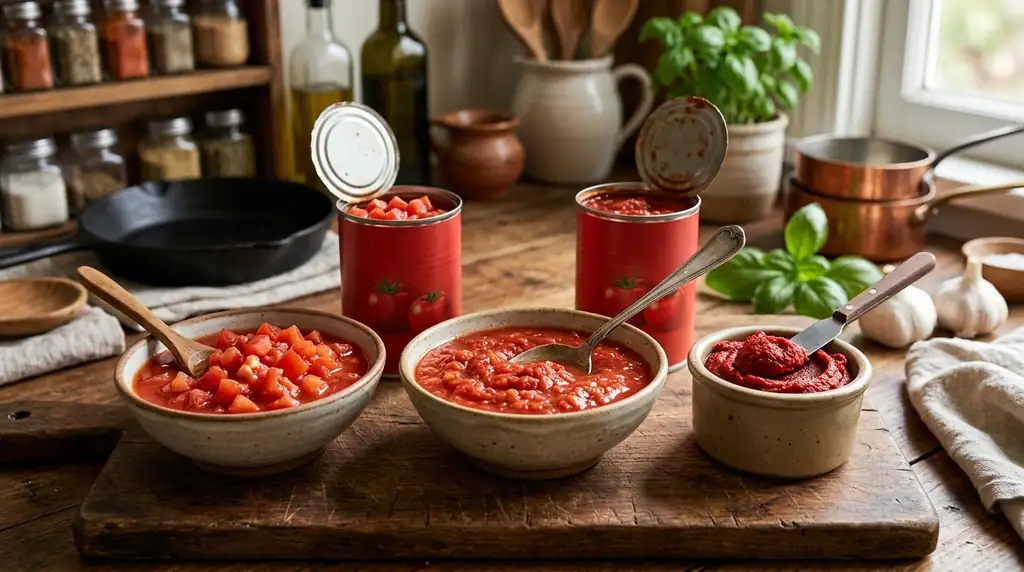
The Superiority of the Can
Unless it is the peak of August and you are buying tomatoes directly from a local farmer's market, canned tomatoes are vastly superior to fresh supermarket tomatoes. Canned tomatoes are picked at absolute peak ripeness and processed immediately, locking in their sweetness, whereas winter supermarket tomatoes are picked green and gassed to turn red, resulting in a mealy, flavorless interior.
However, the canning aisle offers a dizzying array of options: whole peeled, crushed, diced, puree, and paste. Choosing the wrong can will fundamentally alter the texture and cooking time of your dish.
Whole Peeled Tomatoes (The Gold Standard)
If you only have room for one type of tomato in your pantry, buy Whole Peeled (specifically San Marzano, if you can find them).
- Processing: These are the least processed. They are simply peeled and packed in tomato juice or puree.
- Versatility: Because they are whole, they are incredibly versatile. You can crush them by hand for a rustic, chunky marinara, or pulse them in a blender for a smooth pizza sauce.
- Usage: They are mandatory for long, slow-simmered sauces (like Bolognese or Sunday Gravy) because they break down naturally over several hours, creating a rich, velvety texture.
Diced Tomatoes (The Trap)
Diced tomatoes seem convenient, but they possess a chemical secret that ruins sauces.
- Processing: To prevent the small cubes from turning into mush during the high-heat canning process, manufacturers treat diced tomatoes with Calcium Chloride (a firming agent).
- The Problem: Calcium Chloride permanently alters the cellular structure of the tomato. Those little cubes will NEVER break down, no matter how long you boil them. They will remain firm, distinct chunks forever.
- Usage: Never use diced tomatoes for a smooth pasta sauce or pizza sauce. Use them strictly in dishes where you want distinct, visible chunks of tomato to survive the cooking process, such as in a chunky chili, a hearty minestrone soup, or a quick salsa.
Crushed Tomatoes and Tomato Paste
These are the convenience options and the flavor enhancers.
- Crushed / Puree: These are heavily processed and often blended with tomato paste to thicken them. They are perfect for quick weeknight pasta sauces where you don't have hours to let whole tomatoes break down. However, the quality varies wildly between brands.
- Tomato Paste: This is pure, concentrated tomato essence. The tomatoes are cooked for hours until all the water evaporates, leaving a dense, sweet, intensely savory (umami) paste.
- The Paste Secret: Never just stir raw tomato paste into a liquid. You must "pincer" (brown) the paste in the hot oil of your pan for a few minutes before adding liquids. Cooking the raw paste caramelizes its sugars and deepens its flavor exponentially.
By stocking whole peeled tomatoes for the weekend and crushed tomatoes for quick weeknights, you control the texture of your Italian cooking.