
Mastering Cooking Oils: Smoke Points and Flavor Profiles
Not all oils are created equal. Using the wrong oil for the wrong cooking method can ruin your food and fill your kitchen with acrid smoke.
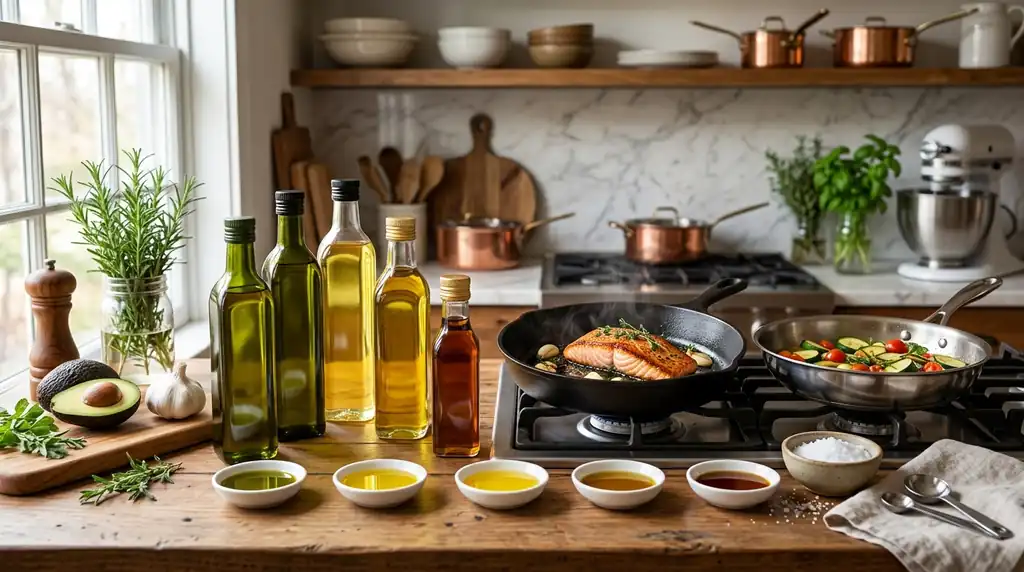
The Science of the Smoke Point
Every cooking fat—whether it is butter, olive oil, or bacon grease—has a specific temperature limit. This limit is known as the "smoke point." It is the exact temperature at which the oil stops shimmering and begins to burn, breaking down at a molecular level and emitting visible, bluish smoke.
When an oil exceeds its smoke point, it undergoes a chemical degradation. It releases free radicals and a compound called acrolein, which gives burnt food its nasty, bitter, and acrid flavor. Understanding these limits is the foundation of proper heat management in the kitchen.
Unrefined vs. Refined Oils
The manufacturing process dictates both the flavor and the heat tolerance of an oil.
- Unrefined (Virgin or Cold-Pressed) Oils: These are mechanically pressed from the plant without the use of chemical solvents or high heat. They retain all of their natural flavor, color, and nutritional compounds. Because these organic compounds burn easily, unrefined oils always have very low smoke points.
- Refined Oils: These oils are heavily processed, filtered, and bleached to remove all impurities, flavors, and colors. The result is a highly stable, completely neutral-tasting oil with an exceptionally high smoke point.
A Step-by-Step Guide to Oil Selection
To become a confident cook, you need to categorize your pantry oils based on their intended culinary application.
- Step 1: Identify your cooking method. Are you searing a steak at 500°F? Are you gently sweating onions? Or are you dressing a fresh salad?
- Step 2: For High-Heat Searing and Deep Frying (400°F+): You absolutely must use a refined, high-smoke-point oil. Excellent choices include Avocado Oil (520°F), Safflower Oil (510°F), Light/Refined Olive Oil (465°F), or Peanut Oil (450°F). These will not burn when you cast iron is screaming hot.
- Step 3: For Medium-Heat Sautéing and Baking (350°F - 400°F): You can use oils with moderate smoke points. Standard Vegetable Oil, Canola Oil, or Grapeseed Oil are perfect for everyday pan-frying, roasting vegetables, and baking cakes.
- Step 4: For Low-Heat Cooking and Flavoring (Under 350°F): This is where Extra Virgin Olive Oil (EVOO) shines. Its smoke point hovers around 350°F. It is perfect for slowly sweating garlic, gently poaching fish, or finishing a soup.
- Step 5: For Cold Applications Only: Delicate, highly flavorful oils should never see the inside of a hot pan. Toasted Sesame Oil, Walnut Oil, Truffle Oil, and high-end artisanal Extra Virgin Olive Oils should be used exclusively for salad dressings or drizzled over finished dishes right before serving.
Crucial Storage Tips
Oils are susceptible to rancidity, which is triggered by exposure to heat, light, and oxygen.
- Never store your expensive olive oil directly next to the hot stove or on a sunny windowsill. The heat and UV light will degrade the flavor rapidly.
- Keep everyday cooking oils in a cool, dark cabinet or pantry.
- Delicate nut oils (like walnut or hazelnut oil) have a very short shelf life and should actually be stored in the refrigerator to prevent them from going rancid.
By treating your oils as specific tools rather than interchangeable liquids, you will dramatically improve the flavor of your food and avoid setting off the smoke detector.