
How to Keep Herbs Fresh for Weeks
Tired of cilantro turning to mush in the fridge? Learn the jar-and-bag method to drastically extend the lifespan of your fresh herbs.
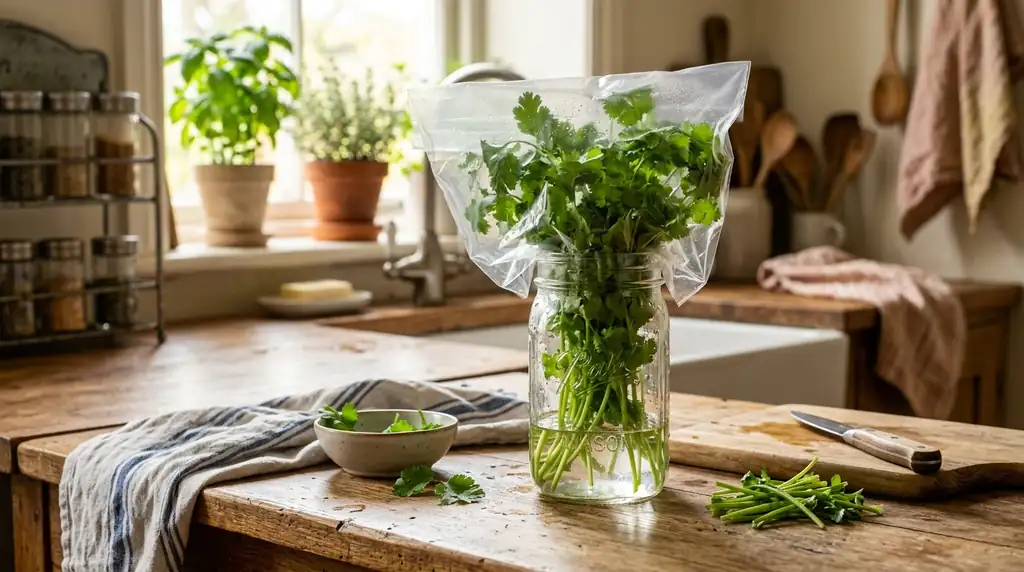
The Tragedy of Wilted Herbs
We have all been there: you buy a massive, beautiful bunch of fresh cilantro for a taco recipe that only calls for two tablespoons. You toss the remainder into the crisper drawer of your fridge, and three days later, it has transformed into a dark, slimy, unusable mess.
Fresh herbs are delicate, living plants that have been severed from their roots. To keep them vibrant, crisp, and flavorful for weeks instead of days, you have to treat them with the same care you would a fresh bouquet of flowers.
Step-by-Step Storage for Soft Herbs
Soft herbs include cilantro, parsley, dill, and mint. These herbs have tender stems and require access to water to remain crisp.
- Step 1: When you bring the herbs home, immediately unwrap them and discard any rubber bands or twist ties.
- Step 2: Fill a sink or a large bowl with cold water and gently swish the herbs around to remove any grit or dirt. Spin them dry in a salad spinner or pat them very gently with paper towels.
- Step 3: Using sharp scissors or a knife, snip about half an inch off the bottom of the stems. This creates a fresh cut for the plant to drink water.
- Step 4: Fill a clean glass jar (like a mason jar) with one inch of cold water. Place the herbs in the jar, stems down, just like a bouquet of flowers.
- Step 5: Loosely drape a plastic produce bag or a ziplock bag over the top of the herbs to create a mini greenhouse environment. Secure it loosely at the base with a rubber band.
- Step 6: Place the jar in the refrigerator. Change the water every few days if it starts to look cloudy.
Handling Hard Herbs and Basil
Not all herbs like the bouquet method. Hard, woody herbs require a different approach, and basil has a notorious hatred for cold temperatures.
- Hard herbs like rosemary, thyme, and sage prefer slightly damp environments. Wrap them loosely in a slightly damp paper towel and store them in an airtight container or ziplock bag in the fridge.
- Basil is incredibly sensitive to the cold. If put in the fridge, its leaves will instantly turn black. Treat basil like a bouquet (snip the stems, place in a jar of water), but leave it out on the kitchen counter at room temperature.
By taking five minutes to properly process your herbs when you get home from the grocery store, you guarantee access to bright, fresh flavors for weeks to come, entirely eliminating food waste.