
The Maillard Reaction Explained
Browning equals flavor. Learn exactly what the Maillard reaction is, why it matters, and how to achieve the perfect sear every single time.
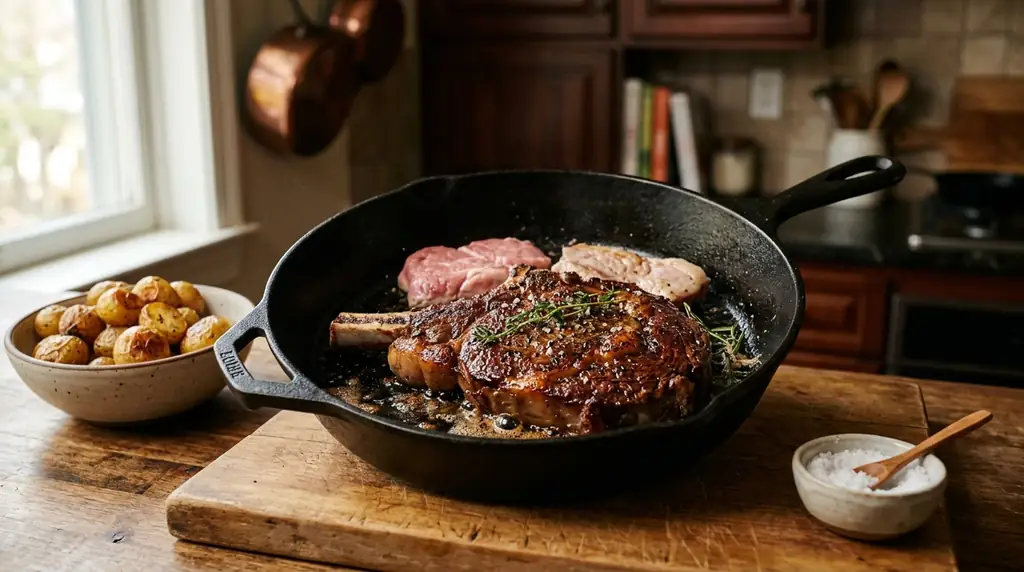
The Chemistry of Deliciousness
Have you ever wondered why a boiled steak is gray and flavorless, while a perfectly seared steak is rich, savory, and incredibly appetizing? The answer lies in one of the most important chemical reactions in all of cooking: the Maillard reaction.
Discovered in 1912 by French chemist Louis-Camille Maillard, this reaction occurs when amino acids (proteins) and reducing sugars are subjected to high heat. They rearrange themselves into hundreds of brand-new, complex flavor compounds, resulting in that gorgeous brown crust.
How to Force the Reaction
The Maillard reaction does not happen easily. It requires a very specific environment to trigger. If you want a restaurant-quality crust on your food, you must follow these steps precisely.
- Step 1: Eliminate all surface moisture. The Maillard reaction occurs rapidly around 300°F (150°C). Water boils at 212°F (100°C) and turns to steam. If your food is wet, the temperature of the surface will never exceed 212°F until all the water evaporates, meaning your food will steam instead of sear. Pat your meat completely dry with paper towels.
- Step 2: Pre-heat your pan. Use a heavy-bottomed pan like cast iron or carbon steel that can hold onto heat. Let it pre-heat empty over medium-high heat for several minutes.
- Step 3: Add a high-smoke-point oil (like avocado or grapeseed) right before adding the food to prevent the oil from degrading.
- Step 4: Press the food firmly into the pan to ensure maximum surface contact. The reaction can only occur where the food physically touches the hot metal.
- Step 5: Do not touch it! Let the food sit undisturbed for at least 2 to 3 minutes to allow the complex web of browning compounds to form and crust over.
Beyond Just Meat
While most commonly associated with searing steaks and burgers, the Maillard reaction is responsible for the flavor of many of your favorite foods.
- It is what turns pale dough into the dark, crunchy, flavorful crust of a loaf of sourdough bread.
- It is responsible for the dark color and complex flavor profile of roasted coffee beans.
- It is what makes golden, crispy French fries infinitely better than boiled potatoes.
By controlling moisture and utilizing high, sustained heat, you harness the power of chemistry to elevate your cooking from bland to extraordinary.