
Understanding the Maillard Reaction vs. Caramelization
Browning equals flavor, but not all browning is the same. Understand the chemical difference between searing a steak and caramelizing onions.
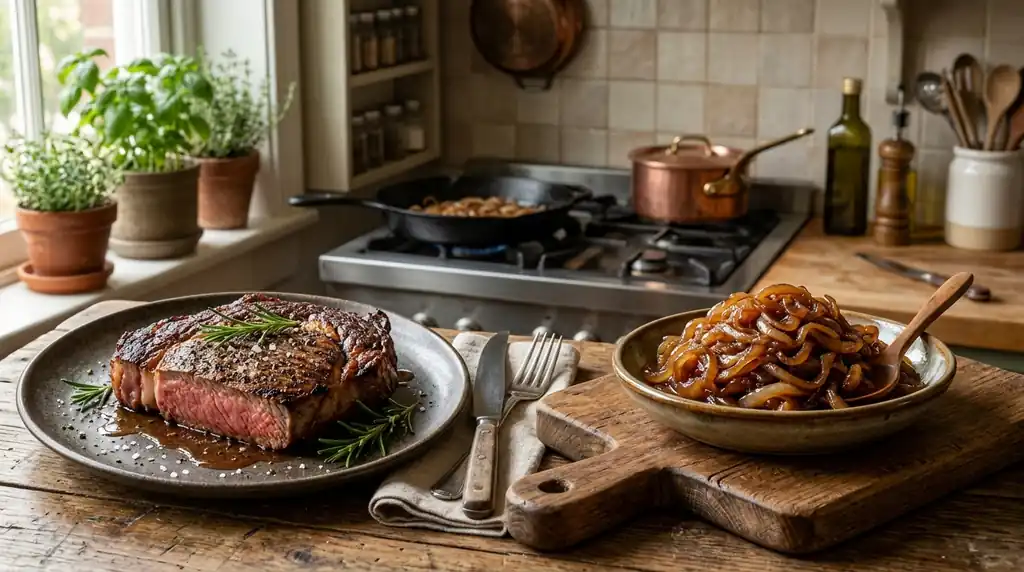
The Chemistry of Browning
In culinary school, one of the first mantras drilled into students is "color equals flavor." When raw ingredients are subjected to heat, they undergo profound chemical transformations that turn pale, bland foods into deeply savory, complex, and visually appealing dishes.
However, the term "browning" is frequently misused. Many cooks mistakenly claim they are "caramelizing" a steak or triggering the "Maillard reaction" in sugar. These are two completely distinct chemical processes that occur at different temperatures and require entirely different ingredients to trigger.
The Maillard Reaction (Proteins)
The Maillard reaction is responsible for the savory, roasted, meaty flavors we love. It is what gives a seared steak its crust, roasted coffee its depth, and a loaf of bread its golden crust.
- The Requirements: The Maillard reaction requires three things: amino acids (proteins), reducing sugars, and very high heat.
- The Temperature: It does not occur rapidly until temperatures reach roughly 285°F to 330°F (140°C to 165°C).
- The Enemy: Moisture. Water boils at 212°F, meaning if your food is wet, the surface temperature cannot exceed 212°F until all the water evaporates. This is why a wet steak will steam and turn gray instead of searing. You must pat meat completely dry before cooking.
- The Process: When high heat hits the dry protein, the amino acids and sugars break down and rapidly recombine into hundreds of new, complex flavor molecules, creating the savory "umami" crust.
Caramelization (Sugars)
Caramelization is a simpler process that involves absolutely zero protein. It is the pyrolysis (thermal decomposition) of pure sugar.
- The Requirements: Caramelization only requires sugar and heat. It is what turns granulated sugar into liquid caramel, and what turns sharp, pungent raw onions into a sweet, dark, jammy condiment.
- The Temperature: Different sugars caramelize at different temperatures. Fructose (found in fruit) caramelizes at a low 230°F. Sucrose (table sugar) caramelizes at a much higher 320°F.
- The Process: As the sugar is heated past its melting point, the molecules break apart, releasing volatile compounds that produce a sweet, nutty, slightly bitter flavor profile and a deep amber color.
- The Danger: Because it involves pure sugar, caramelization can cross the line into incineration incredibly fast. Once caramel turns black, it is irreversibly bitter and must be discarded.
Step-by-Step: Truly Caramelized Onions
Most recipes lie, claiming you can caramelize onions in 10 minutes. True caramelization takes time.
- Step 1: Slice a large quantity of onions (they will reduce in volume by 80%).
- Step 2: Place them in a heavy skillet over medium-low heat with a little butter and oil. Do not add salt yet, as it draws out water and cools the pan.
- Step 3: Cook very slowly, stirring occasionally. The onions will sweat, then soften, then turn blond. This takes 20 minutes.
- Step 4: As the natural sugars in the onion begin to caramelize on the bottom of the pan, add a tiny splash of water or wine to deglaze, scraping the browned sugars back into the onions.
- Step 5: Continue this slow process of browning and deglazing for a full 45 to 60 minutes until the onions are a deep, dark mahogany brown.
By understanding whether you are manipulating proteins or sugars, you can dial in your heat control to perfectly execute any recipe.