
The Science of Freezing and Defrosting Meat
Freezer burn is preventable, and microwave thawing ruins steaks. Master the thermodynamics of long-term meat storage.
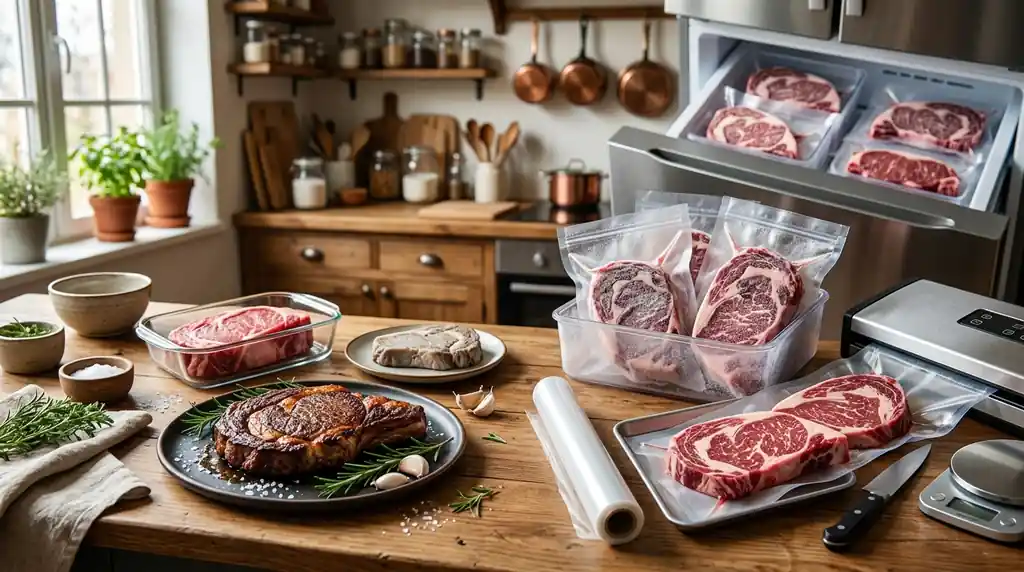
The Enemy: Freezer Burn
The freezer is a remarkable tool, halting bacterial growth indefinitely. However, while meat in a freezer will never spoil, its quality can be utterly destroyed by freezer burn. Freezer burn is not actually a "burn"; it is severe localized dehydration (sublimation).
When air touches the surface of frozen meat, it slowly pulls the moisture out of the muscle fibers, turning the exterior gray, leathery, and entirely flavorless. To preserve meat perfectly, you must eliminate its contact with air completely.
Step-by-Step: The Perfect Freeze
Throwing a styrofoam tray of supermarket chicken directly into the freezer is a guarantee for freezer burn, as the plastic wrap is incredibly thin and traps air inside.
- Step 1: The Vacuum Seal (Ideal). A vacuum sealer is the ultimate tool. It removes 100% of the air and seals the meat in thick, impermeable plastic. Meat frozen this way will easily last 2 to 3 years without degradation.
- Step 2: The Double Wrap (Alternative). If you lack a vacuum sealer, you must double wrap. First, wrap the meat tightly in heavy-duty plastic wrap, pressing it firmly against every contour of the meat to force out any air bubbles.
- Step 3: The Second Layer. Wrap the plastic-wrapped meat tightly in a layer of heavy-duty aluminum foil OR place it into a thick freezer-grade ziplock bag, squeezing out as much air as possible before sealing.
- Step 4: Flat Freezing. Freeze ground meat or thin steaks completely flat. This makes them significantly easier to stack and drastically reduces thawing time.
The Three Safe Defrosting Methods
Leaving a frozen chicken breast on the kitchen counter all day is highly dangerous; the exterior will reach room temperature and breed bacteria while the center remains frozen.
- Method 1 (The Refrigerator): This is the safest and best method. Place the frozen meat on a rimmed plate or tray (to catch drips) on the bottom shelf of the fridge. It takes about 24 hours for a steak or chicken breast, and up to 3 days for a large roast.
- Method 2 (The Cold Water Bath): If you forgot to take the meat out yesterday, use this method. Submerge the sealed, waterproof bag of meat in a large bowl of COLD tap water. You must change the water every 30 minutes. A 1-pound steak will thaw in about an hour. Never use hot water, or you will cook the exterior.
- Method 3 (The Microwave): Use this only in a desperate emergency. The microwave thaws unevenly, frequently cooking the edges of the meat until rubbery while the center remains icy. Use the specific "Defrost" setting, and cook the meat immediately after.
By removing air before freezing and utilizing the refrigerator for thawing, your frozen steaks will taste identical to fresh ones.