
How to Keep Celery and Carrots Incredibly Crisp
Tired of finding bendy carrots and rubbery celery in the crisper drawer? Learn the underwater storage hack that keeps them snappy for nearly a month.
The Loss of Turgor Pressure
Celery and carrots are root and stalk vegetables prized for their aggressive, satisfying crunch. This crunch is a result of "turgor pressure"—the high internal water pressure pushing outward against the rigid cell walls of the plant.
When you store these vegetables loosely in the refrigerator, the dry, cold air acts like a slow dehydrator. It pulls the moisture out of the plant cells. As the water leaves, the turgor pressure drops, the cell walls collapse, and the vegetable becomes limp, bendy, and rubbery. While they are still safe to eat, their culinary texture is ruined.
The Submersion Hack
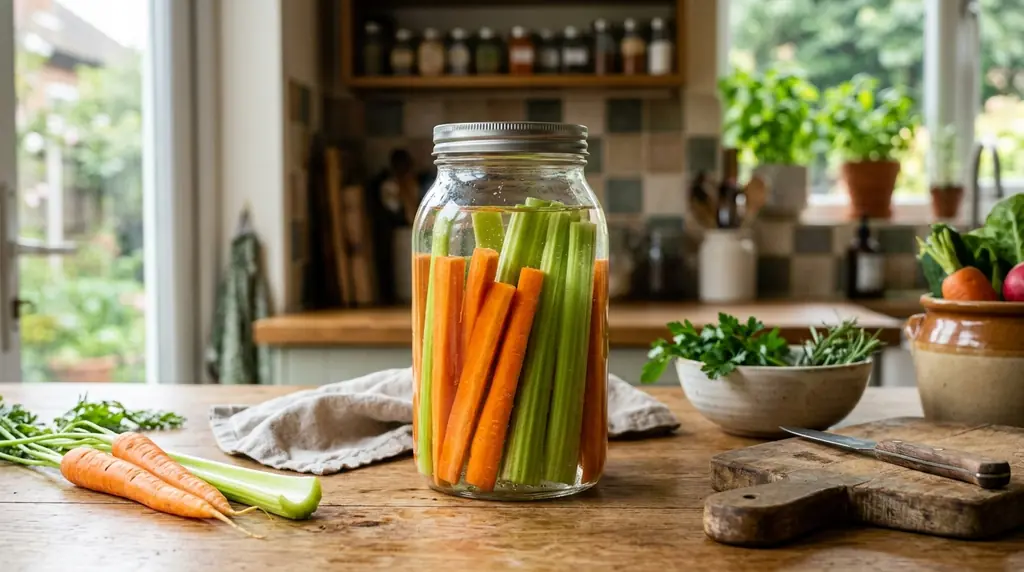
To stop dehydration, you simply cut off the vegetable's access to the dry air by storing them entirely underwater.
- Because these vegetables are incredibly dense, they will not become waterlogged and mushy like a mushroom or a strawberry would. Instead, they absorb just enough water to maintain maximum turgor pressure indefinitely.
- This method will keep carrots and celery snapping crisp for up to 3 or 4 weeks.
Step-by-Step Underwater Storage
This method takes a few minutes of prep work but pays massive dividends in longevity.
- Step 1: Prep the vegetables. For celery, cut the stalks away from the root base. For carrots, peel them (if desired) and cut the green leafy tops off immediately (the green tops will aggressively suck moisture out of the orange root if left attached).
- Step 2: Cut to size. Cut the celery stalks and carrots into sticks or halves that will easily fit into your storage containers.
- Step 3: The Container. Find a tall, airtight container (large mason jars or tall plastic deli containers work perfectly).
- Step 4: Pack them in. Stand the celery or carrot sticks upright in the container.
- Step 5: Submerge. Fill the container completely to the brim with fresh, cold tap water, ensuring the vegetables are 100% submerged.
- Step 6: Seal and Store. Place the lid tightly on the container and store it in the refrigerator.
- Step 7: Maintenance. Change the water in the container every 3 to 4 days to prevent bacterial growth or cloudiness.
Reviving the Dead
If you forgot to use this method and currently have a rubbery carrot in your fridge, you can use this exact same process to save it. Cut the ends off, submerge it in ice water for 24 hours, and osmosis will force the water back into the cells, restoring the crunch.
By storing dense vegetables in their native element (water), you completely eliminate textural degradation.