
Navigating Vinegar: Balsamic, Apple Cider, White, and Rice
Vinegar is simply acetic acid, but its source material changes everything. Learn how to pair the right vinegar with your dish to achieve the perfect balance.
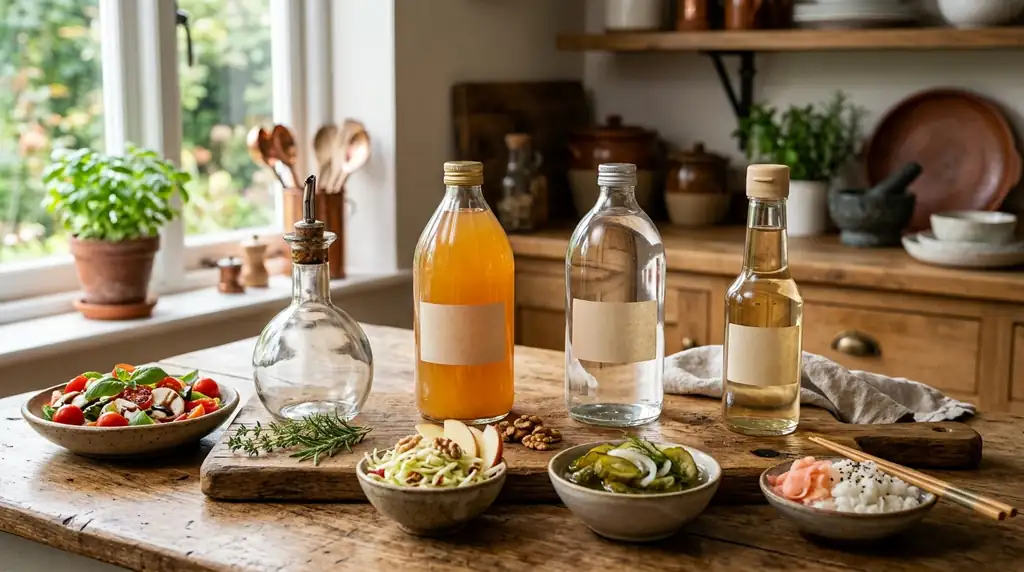
The Importance of Acid
If a dish tastes "flat" or "boring," the answer is almost never more salt; the answer is usually acid. Acid brightens flavors, cuts through heavy fats, and causes your salivary glands to activate, which literally makes the food taste juicier. While lemons and limes are great, vinegar provides acid with a massive shelf life and complex flavor profiles.
All vinegar is made by fermenting alcohol (ethanol) into acetic acid using a bacteria called "mother of vinegar." The flavor of the final vinegar depends entirely on the alcohol you started with.
The Harsh Cleaners
Distilled White Vinegar is the most aggressive.
- Source: Made from distilled grain alcohol (like vodka).
- Flavor: It is incredibly sharp, aggressive, and entirely one-dimensional. It lacks any complex fruity or earthy notes.
- Usage: In cooking, it is primarily used for pickling vegetables (where you want a clean, neutral acid) or for poaching eggs (the harsh acid coagulates the egg whites quickly). Its primary use in the modern home, however, should be as a non-toxic cleaning agent for windows and descaling coffee makers.
The Fruity Vinegars
These vinegars maintain the flavor of their source fruit.
- Apple Cider Vinegar (ACV): Made from fermented apple juice (hard cider). It has a pronounced, fruity, apple flavor and a slightly mellow acidity. It is fantastic in barbecue sauces, pork marinades, and robust coleslaw dressings.
- Wine Vinegars (Red and White): Made from fermented wine. They retain the complex, tannic, floral notes of the grapes. Red wine vinegar is robust and perfect for heavy beef stews or classic Greek salad dressings. White wine vinegar is more delicate and is the classic choice for Hollandaise sauce or a light vinaigrette for delicate greens.
The Specialty Vinegars
These vinegars define specific global cuisines.
- Balsamic Vinegar: Authentic traditional balsamic (Aceto Balsamico Tradizionale) is not made from wine; it is made from reduced grape must (juice) that is aged in wooden barrels for 12 to 25 years. It becomes incredibly thick, syrupy, sweet, and complex. It should NEVER be cooked. It is a finishing glaze for strawberries, parmesan cheese, or expensive meats. (Note: Most supermarket balsamic is just cheap wine vinegar colored with caramel and thickened with cornstarch).
- Rice Vinegar: The backbone of Asian cooking. It is made from fermented rice wine. It is significantly milder, sweeter, and less acidic than Western vinegars. It is mandatory for seasoning sushi rice, making quick Asian pickles, and balancing spicy stir-fry sauces.
By stocking your pantry with Apple Cider, White Wine, and Rice vinegar, you can instantly balance any dish from any cuisine.