
Understanding Olive Oil: Extra Virgin, Light, and Pomace
Stop frying with your expensive Extra Virgin Olive Oil. Learn how the extraction process dictates flavor, smoke point, and exactly how you should be using it.
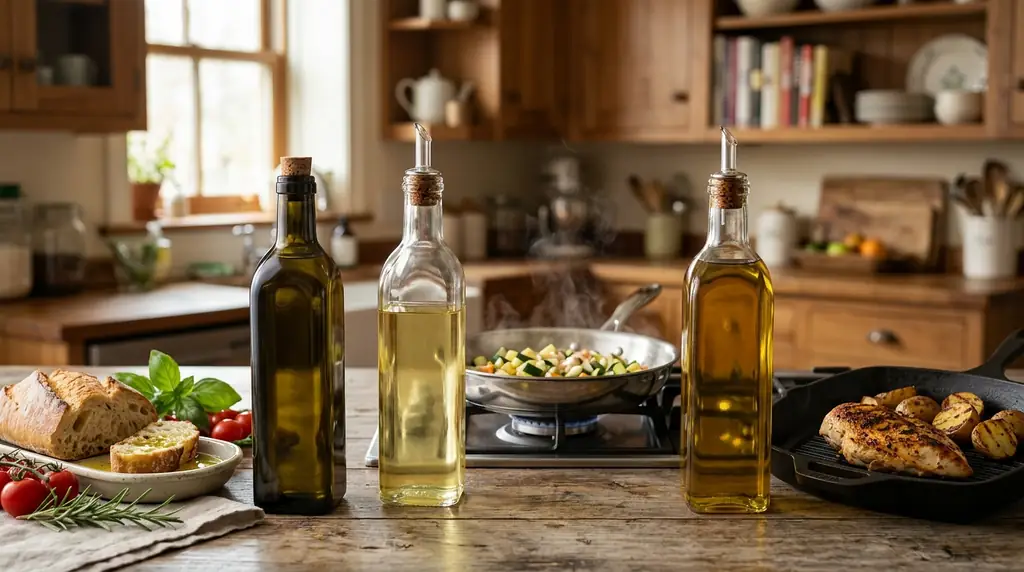
The Olive Oil Confusion
The grocery store aisle dedicated to olive oil is overwhelming. Prices range from $5 to $50 a bottle, and the labels boast confusing terms like "First Cold Pressed," "Extra Light," and "Pure." Many consumers buy the most expensive Extra Virgin Olive Oil (EVOO) they can afford and use it for everything—including deep frying.
This is a massive culinary mistake. The different grades of olive oil are determined by how the oil is extracted from the fruit. The extraction method drastically alters both the flavor profile and the smoke point (the temperature at which the oil begins to burn and turn toxic).
Extra Virgin Olive Oil (EVOO)
EVOO is the highest quality, most unrefined olive oil available.
- Extraction: It is extracted purely through mechanical means (crushing the olives) without the use of high heat or chemical solvents. It must meet strict chemical criteria for low acidity.
- Flavor: Because it is unrefined, it retains the intense, complex flavors of the olive fruit. It can taste grassy, peppery, fruity, or buttery.
- Smoke Point: Low (roughly 350°F to 375°F).
- Usage: NEVER use high-quality EVOO for high-heat searing or frying. The heat will instantly destroy the delicate flavor compounds and burn the oil, making it taste bitter. Use it exclusively for raw applications: salad dressings, dipping bread, or drizzling over a finished bowl of soup or pasta as a garnish.
Virgin and "Pure" Olive Oil
If a bottle simply says "Olive Oil" or "Pure Olive Oil," it is a refined product.
- Extraction: It is usually a blend of a small amount of cold-pressed virgin oil mixed with heavily refined olive oil (which has been treated with heat or chemicals to remove flaws).
- Flavor: It is very neutral, lacking the peppery punch of EVOO.
- Smoke Point: Medium-High (roughly 400°F to 425°F).
- Usage: This is your workhorse cooking oil. Use it for sautéing onions, roasting vegetables, and pan-frying chicken breasts where you want a hint of olive flavor without the oil burning.
"Light" and Olive Pomace Oil
Do not be fooled by the word "Light." It does not mean it is lower in calories or fat (all oil is 100% fat). It simply means it is light in flavor and color.
- Light Olive Oil: This is heavily refined oil. It has almost no olive flavor whatsoever. Its smoke point is very high (up to 470°F), making it suitable for deep frying or baking when you don't want an olive taste.
- Pomace Oil: After the olives are mechanically pressed for EVOO, the leftover solid mash (skins, pits, pulp) still contains some oil. Chemical solvents (like hexane) are used to extract this last bit of oil. Pomace oil is the lowest grade available and is generally used in commercial food production or soap making. It is best avoided in the home kitchen.
Keep a cheap bottle of refined olive oil near the stove for cooking, and a beautiful, expensive bottle of EVOO in a dark cupboard strictly for finishing.