
Fish Sauce Explained: The Funky Umami Bomb
It smells horrifying straight out of the bottle, but it is the secret to complex, restaurant-quality Southeast Asian food. Learn how to wield the power of fish sauce.
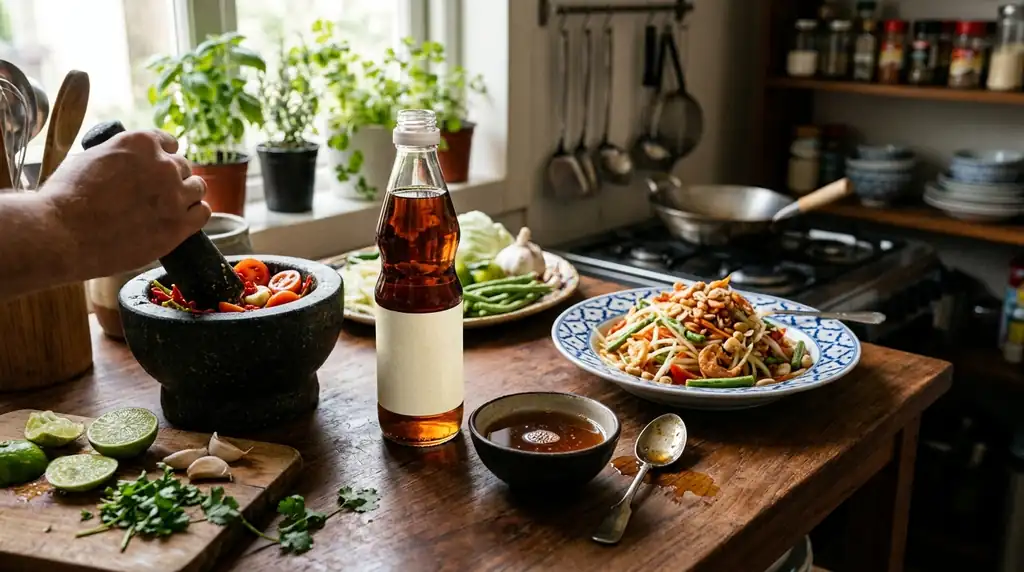
The Scent of Fear
If you have never used fish sauce before, the first time you open a bottle can be a terrifying experience. The aroma is intensely pungent, aggressively fishy, and profoundly funky. Many home cooks take one sniff and throw the bottle in the trash, refusing to put it in their food.
This is a massive culinary mistake. Fish sauce is the absolute backbone of Thai, Vietnamese, and many other Southeast Asian cuisines. It is the liquid equivalent of an ancient culinary magic trick: when added to a hot pan or a complex dressing, the foul, fishy odor completely evaporates, leaving behind nothing but a massive, savory, umami depth.
How is it Made?
The process is ancient and brutally simple.
- Massive wooden barrels are packed with alternating layers of tiny, oily fish (usually anchovies) and sea salt.
- The barrels are sealed and left to sit in the hot tropical sun for anywhere from 12 months to 2 years.
- During this time, the natural enzymes in the fish break down the proteins in a process of controlled fermentation. The fish literally dissolve into a dark, amber liquid.
- This first extraction (the "first press") is the highest quality, most complex fish sauce (often labeled "Nhi" in Vietnamese).
The Culinary Function
Fish sauce serves the exact same culinary purpose in Southeast Asia that soy sauce serves in China, or parmesan cheese serves in Italy.
- The Umami Bomb: During fermentation, the fish proteins break down into pure glutamic acid (natural MSG). Adding a splash of fish sauce to a stir-fry, a curry, or a dipping sauce provides an explosion of savory flavor that salt alone cannot achieve.
- The Transformer: You will never taste "fishiness" in the final dish. The volatile compounds that smell bad in the bottle burn off instantly when they hit a hot wok, leaving only rich, salty depth.
- The Western Secret Weapon: Professional chefs keep fish sauce in their kitchens even if they never cook Asian food. A teaspoon of fish sauce stirred into a classic Italian Bolognese sauce, a French beef stew, or a pot of chili will massively amplify the "meatiness" of the dish without anyone ever knowing it is there.
How to Buy It
Not all fish sauces are created equal.
- Look at the ingredients. A high-quality fish sauce (like Red Boat brand) should contain only two ingredients: Anchovies and Salt.
- Avoid cheap supermarket brands that list water, sugar, MSG, or artificial preservatives, as these are heavily diluted and artificially flavored.
Pinch your nose, take the leap of faith, and add a splash of fish sauce to your next stir-fry. It will change your cooking forever.