Kitchen Recipe Collection
Brewed Pu-erh Tea
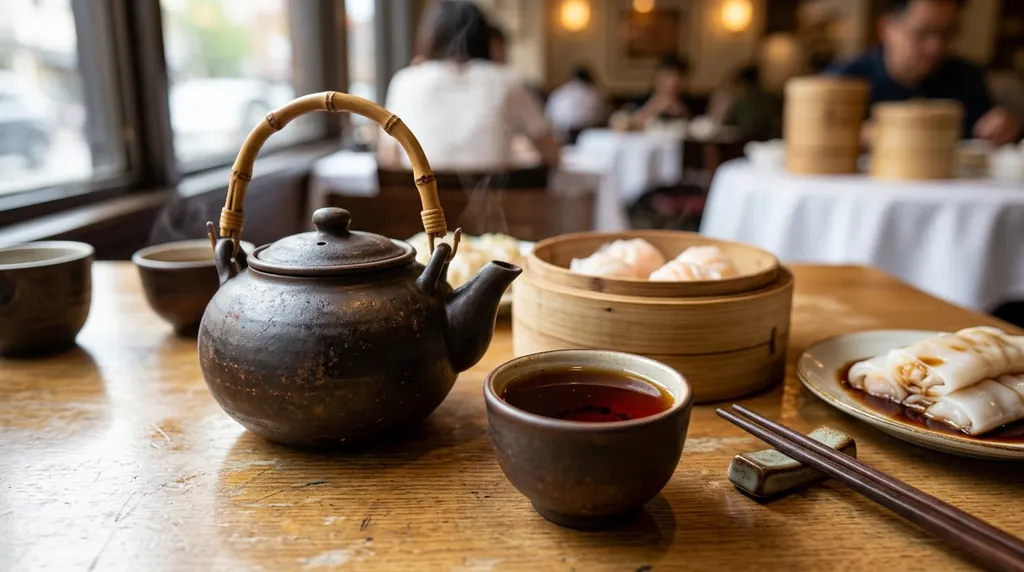
The dark, earthy, deeply fermented tea famous for aiding digestion. Often served at dim sum restaurants to cut through the grease of heavy, savory dishes.
- Prep
- 2 min
- Cook
- 5 min
- Total
- 7 min
- Servings
- 4
- Difficulty
- easy
- Cuisine
- Chinese
Ingredients
Scaled for 4 servings
- 1 chunk (about 5-8 grams) of aged ripe Pu-erh tea (Shou Pu-erh), usually chipped off a pressed cake or bought loose
- Boiling water (212°F / 100°C)
Equipment
- Gaiwan or small Yixing clay teapot
- Tea strainer
Instructions
- 1
Warm the Pot
Pour boiling water into your teapot and teacups to warm the vessels, then discard the water.
- 2
Add Tea
Place the Pu-erh tea chunk into the warmed teapot.
- 3
The Rinse (Crucial)
Pour boiling water over the tea to just cover it. Immediately pour this water out and discard it. This 'wakes up' the compressed leaves and washes away fermentation dust.
- 4
First Steep
Pour boiling water into the pot. Steep for 15-20 seconds. (Ripe Pu-erh infuses very quickly and turns water pitch black).
- 5
Serve
Pour the tea completely out of the pot through a strainer into a serving pitcher or directly into small cups. Never let the leaves sit in water between pours.
- 6
Re-steep
Pu-erh is meant to be re-steeped 5 to 10 times. Add 5-10 seconds to the steeping time for each subsequent infusion.
Cooking Tips
- Unlike green tea, Pu-erh requires absolute boiling water to properly extract its dense, earthy flavors.
- If the tea tastes like dirt or fish, it is low quality. Good Pu-erh should taste like dark chocolate, autumn leaves, damp earth, and mushrooms, with a sweet aftertaste.
Variations
- Raw Pu-erh (Sheng Pu-erh): A different type of Pu-erh that is not artificially fermented. It is much greener, more astringent, and requires cooler water (200°F).
Nutrition Estimate
0 calories · 0g protein · 0g carbs · 0g fat · 0g fiber per serving