
Staub Cast Iron Cocotte
The dark, brooding rival to Le Creuset. Why do many chefs actually prefer Staub?
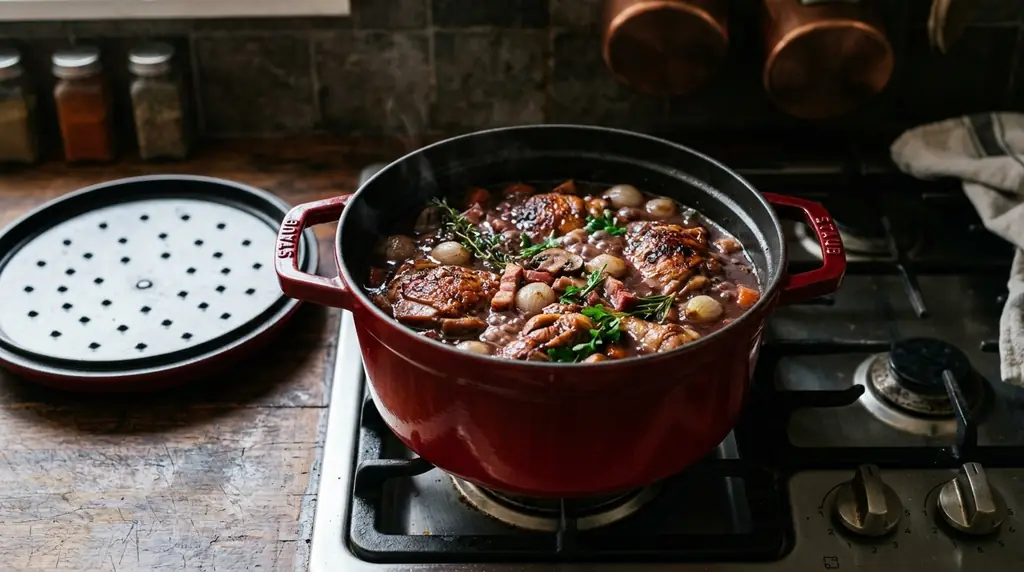
The Culinary Dark Horse
While Le Creuset dominates the mainstream market with bright colors and a white interior, Staub (also made in France) takes a darker, more industrial approach. Their enameled cast iron Cocotte features a matte black interior that many professional chefs actually prefer.
The matte black enamel contains traces of quartz, making it slightly rougher. This texture provides a significantly better surface for searing meats before braising, and it completely hides the inevitable staining that occurs on light-colored enamels after years of cooking.
Self-Basting Perfection
The most significant difference is the lid. Staub lids are incredibly heavy and feature dozens of small dimples (picots) on the underside. During a long braise, condensation collects on these dimples and drips continuously and evenly back down onto the food, creating a self-basting rain forest effect.
- Pros: Matte black interior is incredible for searing and hides stains, heavy self-basting lid yields incredibly tender meats, stunning brass or nickel knobs.
- Cons: Very expensive, the dark interior makes it slightly harder to monitor fond development, incredibly heavy.
- Best For: Serious braisers, stew makers, and those who prefer a more rustic, industrial aesthetic.
The exterior enamel is gorgeous, often featuring deeply saturated jewel tones like Sapphire and Grenadine. While the dark interior requires a bit more lighting to check if onions are burning, the searing performance is undeniably superior.
Final Verdict
The Staub Cocotte is a masterpiece of functional design. The self-basting lid and matte interior make it the ultimate tool for achieving perfectly tender braises and stews.