
How to Season a Cast Iron Skillet
A well-seasoned cast iron skillet is the most versatile tool in your kitchen. Learn the step-by-step process to build a natural, non-stick patina.
The Importance of a Well-Seasoned Skillet
A cast iron skillet is arguably the most versatile piece of equipment you can own in a kitchen. However, its performance heavily relies on the quality of its seasoning. Seasoning isn't about adding salt and pepper; it's the process of baking oil into the iron to create a natural, non-stick patina.
When exposed to high heat, the liquid oil undergoes polymerization, transforming into a hard, slick surface. This layer not only prevents your eggs from sticking but also forms a protective barrier that stops the raw iron from oxidizing and rusting over time.
Step-by-Step Seasoning Process
Building this non-stick layer requires patience and the right technique. Follow these exact steps to season a brand-new skillet or rescue a rusty one from the thrift store.
- Step 1: Vigorously scrub the pan with warm, soapy water and a stiff brush or steel wool if removing rust.
- Step 2: Dry the skillet immediately and completely with a towel. Place it on the stove over low heat for 5 minutes to evaporate any microscopic moisture.
- Step 3: Pour a very small amount (about 1/2 teaspoon) of a high-smoke-point oil (like flaxseed, grapeseed, or canola) into the pan.
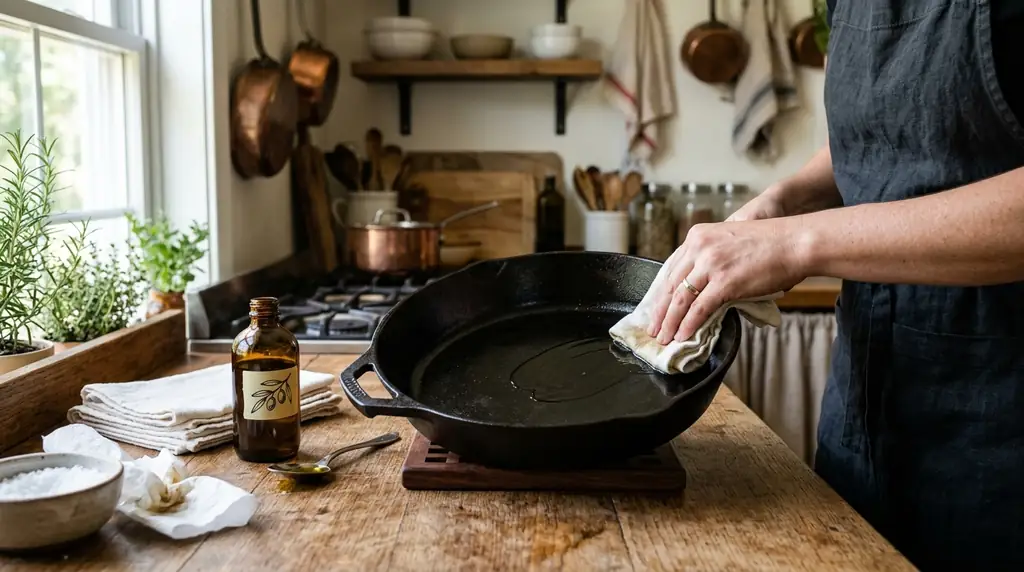
- Step 4: Use a paper towel to rub the oil over the entire surface—inside, outside, and the handle. Then, use a fresh paper towel to wipe it all off until the pan looks practically dry.
- Step 5: Place the skillet upside down on the middle rack of your oven. Place a sheet of aluminum foil on the bottom rack to catch any potential drips.
- Step 6: Bake at 450°F (230°C) for exactly one hour. Turn off the oven and let the pan cool completely inside without opening the door.
Crucial Maintenance Tips
Once your skillet is seasoned, maintaining it is just as important as the initial seasoning. Many people ruin their patina by treating cast iron like a regular stainless steel pan.
- Never soak your cast iron in the sink or put it in the dishwasher.
- Contrary to popular belief, modern dish soap will not strip polymerized seasoning, but harsh scouring pads will.
- Always dry the pan immediately after washing and wipe a microscopic layer of oil on the inside before storing it.
By following this routine, your cast iron skillet will only get better with age, eventually achieving a glossy, glass-like finish that rivals any modern non-stick pan.