
The Peppercorn Spectrum: Black, White, and Green
They all come from the exact same plant, but the processing drastically alters their flavor. Learn when to use the sharp bite of black pepper versus the funky depth of white pepper.
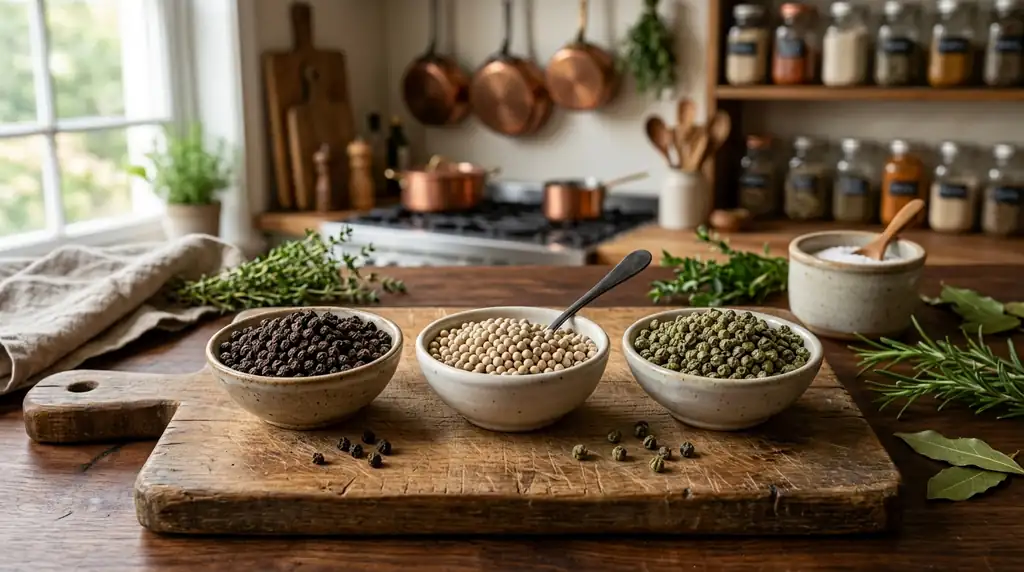
One Plant, Three Flavors
Black pepper is so ubiquitous on dining tables that we often treat it as a mandatory pairing with salt. However, pepper is a highly aromatic, volatile spice that degrades quickly when ground. (Pre-ground black pepper from a tin tastes like spicy sawdust; you must always buy whole peppercorns and grind them fresh).
What most people do not realize is that black, white, and green peppercorns are not different species of plants. They are the exact same berry (from the Piper nigrum vine), harvested at different times and processed differently, resulting in wildly different culinary applications.
Black Peppercorns (The Classic)
This is the most common and robust pepper.
- Processing: The berries are picked while still unripe and green. They are boiled briefly, then left in the sun to dry. As they dry, the skin oxidizes, shrivels, and turns black.
- Flavor: Black pepper has a strong, sharp, pungent bite with woody, piney, and sometimes citrusy aromatic notes.
- Usage: It is a universal seasoning, capable of standing up to heavy red meats, rich stews, and roasted vegetables. It is the defining flavor of dishes like Cacio e Pepe or Steak au Poivre.
White Peppercorns (The French Secret)
White pepper is widely misunderstood in America, but it is the backbone of classical French and authentic Chinese cooking.
- Processing: The berries are left on the vine until fully ripe (red). They are then soaked in water for a week to allow the fleshy outer skin to rot and ferment away. The skin is scrubbed off, leaving only the pale, smooth inner seed, which is then dried.
- Flavor: Because the outer skin (which contains the sharp piney notes) is removed, white pepper lacks the sharp bite of black pepper. However, the fermentation process gives it a deeply earthy, funky, almost barnyard-like aroma. It is smoother but more complex.
- Usage: In French cuisine, it is used strictly for aesthetics: chefs use it to season white sauces (like Béchamel) or mashed potatoes so that no black specks ruin the pristine white color. In Chinese cuisine (like Hot and Sour Soup), it is used heavily for its unique, earthy heat.
Green Peppercorns (The Fresh Bite)
These are the least common of the three.
- Processing: The berries are picked unripe and green (just like black pepper), but instead of being sun-dried, they are either freeze-dried or preserved in a brine (like capers) to halt the oxidation process and maintain their green color.
- Flavor: They are much milder, fresher, and more herbaceous than black pepper, lacking the heavy pungency.
- Usage: Brined green peppercorns are soft enough to be eaten whole. They are a classic addition to rich cream sauces for steak or folded into high-end pâtés and terrines.
By understanding the differences, you can stop ruining the visual appeal of a delicate cream sauce with black specks, and start utilizing the earthy funk of white pepper in your Asian cooking.