
The Art of Blanching and Shocking Vegetables
The secret to vibrant, crisp-tender green beans and asparagus. Boiling vegetables briefly and plunging them into an ice bath halts the cooking process and locks in bright colors.
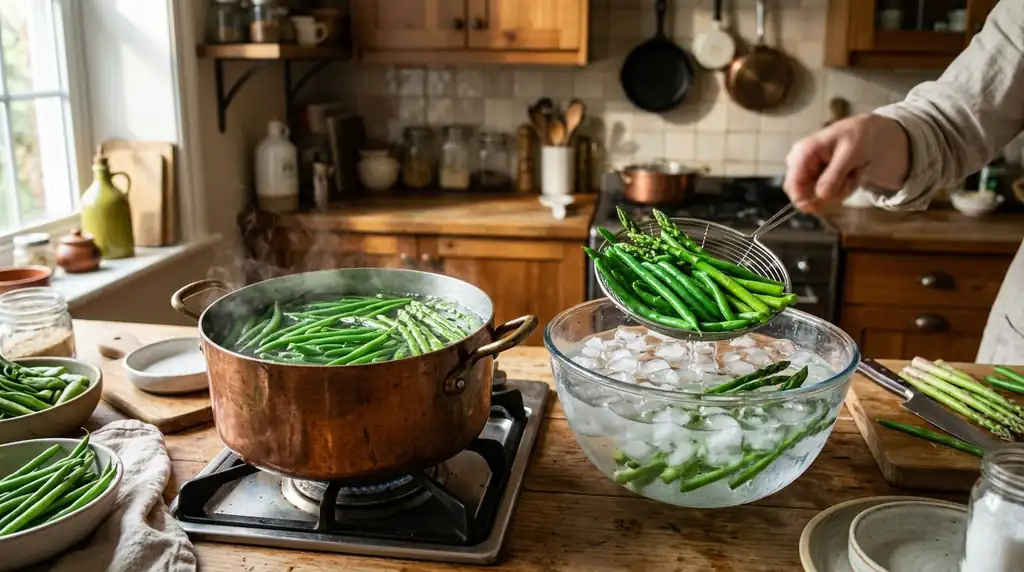
The Secret to Vibrant Green Vegetables
Have you ever wondered how high-end restaurants manage to serve green beans and asparagus that are breathtakingly bright green and perfectly crisp, while yours turn out a sad, limp, olive-drab color?
The secret is a two-part technique called blanching and shocking. It is the absolute best way to prepare delicate green vegetables, whether you plan to eat them immediately in a salad, freeze them for later, or quickly sauté them before dinner.
Step-by-Step Blanching and Shocking
This process requires your full attention. It happens in a matter of minutes, and walking away from the stove will result in overcooked mush.
- Step 1: Bring a large pot of water to a rolling, violent boil. The pot must be large; if you add vegetables to a small pot, the water temperature will drop too quickly.
- Step 2: Season the water heavily with Kosher salt. It should taste like the ocean. This seasons the vegetables from the inside out.
- Step 3: While the water boils, prepare your "shock" bath. Fill a large bowl halfway with cold water, and dump in two large handfuls of ice cubes.
- Step 4: Drop your prepared vegetables (like trimmed green beans) into the boiling water. Leave them in for only 1 to 3 minutes, depending on thickness. You want them tender but still possessing a slight crunch.
- Step 5: Immediately use a spider skimmer or tongs to remove the vegetables from the boiling water.
- Step 6: Plunge the hot vegetables directly into the ice water bath. Push them down so they are fully submerged. Let them sit in the ice bath for exactly as long as they boiled (1 to 3 minutes).
Why This Science Works
Understanding the chemistry behind this process highlights why you can never skip the ice bath.
- When vegetables hit boiling water, the gasses trapped in their cells expand and escape, suddenly amplifying their bright green pigment (chlorophyll).
- However, if left in the heat too long, natural acids within the vegetable are released, which react with the chlorophyll and turn it an ugly grayish-green.
- The ice bath instantly drops the core temperature of the vegetable to freezing. This halts all carryover cooking dead in its tracks, locking in that vibrant color and crisp texture permanently.
Once shocked and dried, these vegetables can be stored in the fridge for days, remaining perfectly crisp until you are ready to use them.