
The Difference Between Chopping, Dicing, and Mincing
Recipes use specific knife terms for a reason. Learn the exact visual dimensions of a chop, a dice, and a mince, and understand how the cut size affects cooking time and flavor release.
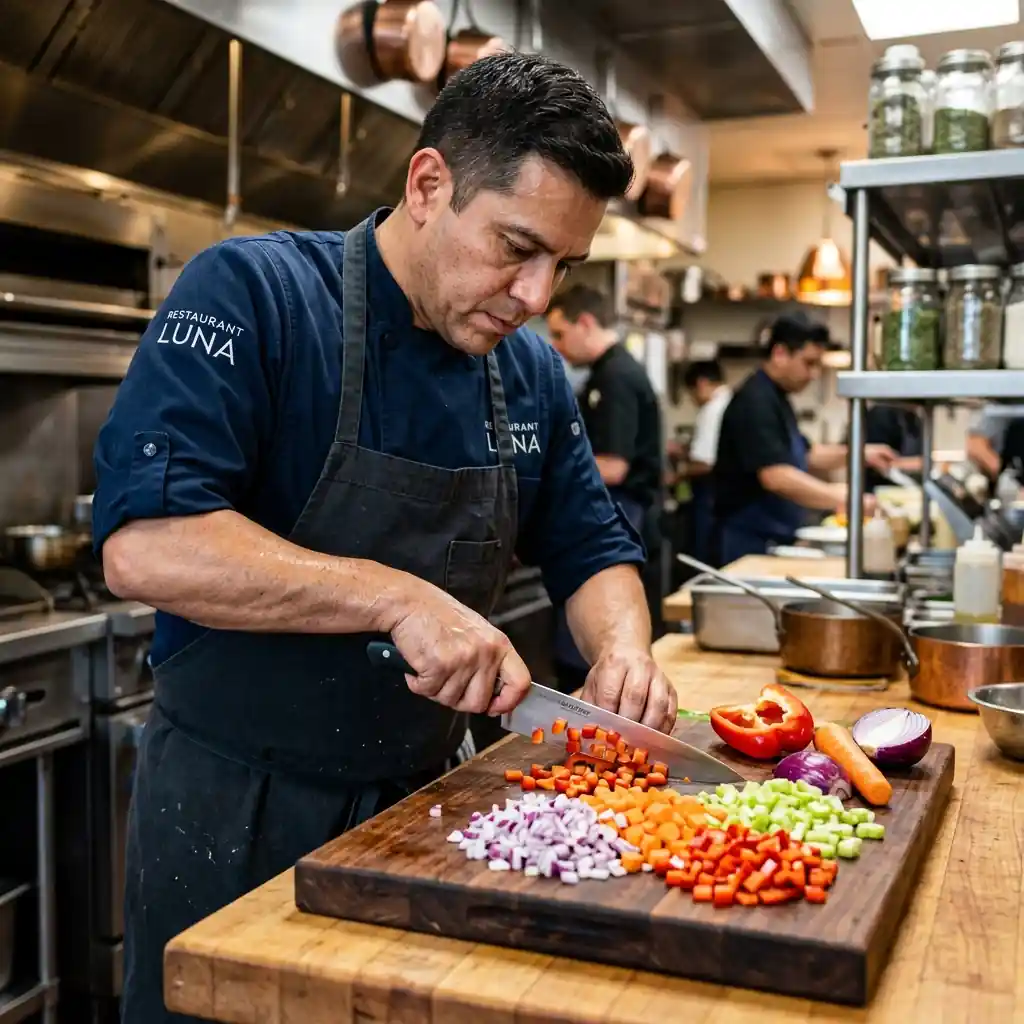
Decoding Culinary Terminology
When a recipe tells you to "chop an onion," it is not a casual suggestion to hack it to pieces however you see fit. In the culinary world, specific knife cuts are a universal language that dictates exactly how a dish will cook, look, and taste.
The size and uniformity of your cuts determine the surface area exposed to heat. If you have large chunks mixed with tiny shreds, the small pieces will burn to ash before the large pieces are even warm. Understanding the difference between a chop, a dice, and a mince is foundational to good cooking.
Step-by-Step Definitions
Here is exactly what a chef expects to see on your cutting board when they call for these specific cuts.
- Step 1: The Chop. A chop is the most rustic and casual cut. It does not need to be a perfect square, but it does need to be relatively uniform in overall size. A standard chop produces bite-sized pieces, roughly 1/2 to 3/4 of an inch in diameter. This is used for hearty stews, roasting vegetables, or making stocks where the exact shape doesn't matter.
- Step 2: The Dice. A dice is a precision cut. The goal is to create perfect, uniform cubes. This ensures that every single piece cooks at the exact same rate and provides an elegant, professional appearance on the plate.
- Step 3: A Large Dice (Macedoine) is exactly 3/4 inch cubes. A Medium Dice (Parmentier) is exactly 1/2 inch cubes. A Small Dice (Macédoine) is exactly 1/4 inch cubes. A Brunoise is an incredibly tiny, precise 1/8 inch cube.
- Step 4: The Mince. A mince is the finest cut possible with a knife. The goal is to break the ingredient down into tiny, irregular specks, almost turning it into a paste.
- Step 5: Mincing is almost exclusively reserved for highly pungent aromatics like garlic, ginger, or fresh chilies.
- Step 6: To mince effectively, gather your chopped garlic into a pile. Rest the tip of your chef's knife on the board, place your non-dominant hand flat on the spine of the blade, and rock the knife rapidly up and down over the pile until it is practically pulverized.
Why It Changes the Flavor
The size of the cut directly alters the intensity of the flavor, particularly with alliums like garlic and onions.
- When you cut an onion or garlic clove, you crush its cell walls, which releases an enzyme that creates its pungent flavor and smell.
- A large chop crushes very few cells, resulting in a mild, sweet flavor when cooked.
- A fine mince destroys millions of cells, releasing massive amounts of enzymes, creating an incredibly sharp, aggressive, and intense flavor profile that melts seamlessly into sauces.
Take your time during prep. By mastering these three cuts, you elevate yourself from an amateur cook to a precise culinary technician.