
How to Make a Classic French Vinaigrette
Ditch the bottled salad dressing. Memorize the classic 3-to-1 ratio of oil to vinegar, and learn how to properly emulsify it with Dijon mustard for a silky, unified dressing.
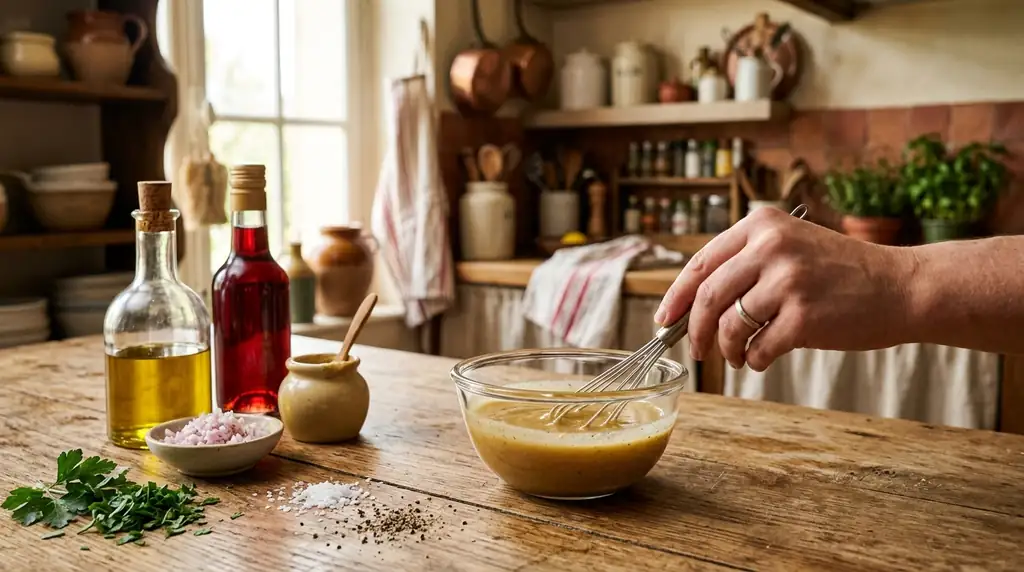
Ditching the Bottled Dressing
If you are buying bottles of salad dressing from the grocery store, you are paying a premium for water, cheap seed oils, high-fructose corn syrup, and artificial stabilizers. The secret to a phenomenal salad is making the dressing yourself.
The classic French vinaigrette is the undisputed king of salad dressings. It is bright, acidic, rich, and velvety. Once you memorize the basic ratios and the science behind emulsification, you can whip up a restaurant-quality dressing in under two minutes.
Step-by-Step Emulsification
Oil and vinegar naturally hate each other. If you shake them together, they will separate back into two layers within seconds. To bind them together permanently into a creamy, unified sauce, you must create an emulsion.
- Step 1: Memorize the Golden Ratio. A classic vinaigrette is always 3 parts oil to 1 part acid. For a standard salad, use 3 tablespoons of extra virgin olive oil and 1 tablespoon of acid (like white wine vinegar or fresh lemon juice).
- Step 2: Choose your vessel. A medium-sized glass mixing bowl is ideal. Place a damp kitchen towel under the bowl to keep it from spinning on the counter while you whisk.
- Step 3: Add your acid to the bowl. Next, add your emulsifier. An emulsifier is a molecular bridge that holds oil and water together. Dijon mustard is the classic choice. Add 1 teaspoon of Dijon to the vinegar.
- Step 4: Add your flavorings. Toss in a pinch of Kosher salt, freshly ground black pepper, and perhaps a finely minced shallot or clove of garlic. Whisk this base mixture together vigorously.
- Step 5: The Drizzle. This is the crucial step. While whisking the mustard/vinegar mixture constantly and rapidly, begin pouring the olive oil into the bowl in the slowest, thinnest stream possible.
- Step 6: Watch the magic happen. As you slowly whisk in the oil, the mixture will suddenly transform from a watery liquid into a thick, creamy, opaque emulsion. Taste it by dipping a leaf of lettuce into it, and adjust seasoning if necessary.
Variations on a Theme
Once you master the 3:1 ratio and the slow-drizzle technique, the variations are infinite.
- Balsamic Vinaigrette: Swap the white wine vinegar for high-quality balsamic vinegar, and add a tiny drizzle of honey to balance the sharpness.
- Citrus Vinaigrette: Use a mix of fresh lemon, lime, and orange juice as your acid, and swap the olive oil for a neutral oil like grapeseed to let the fruit shine.
- Herb Vinaigrette: Throw a handful of finely chopped fresh basil, parsley, and chives into the finished emulsion.
A properly emulsified vinaigrette clings beautifully to lettuce leaves rather than pooling at the bottom of the bowl, ensuring every bite is perfectly seasoned.