
How to Properly Clean Wooden Cutting Boards
Never put wood in the dishwasher! Discover the salt-and-lemon scrub technique to naturally disinfect your cutting boards and learn how often you should oil them to prevent cracking.
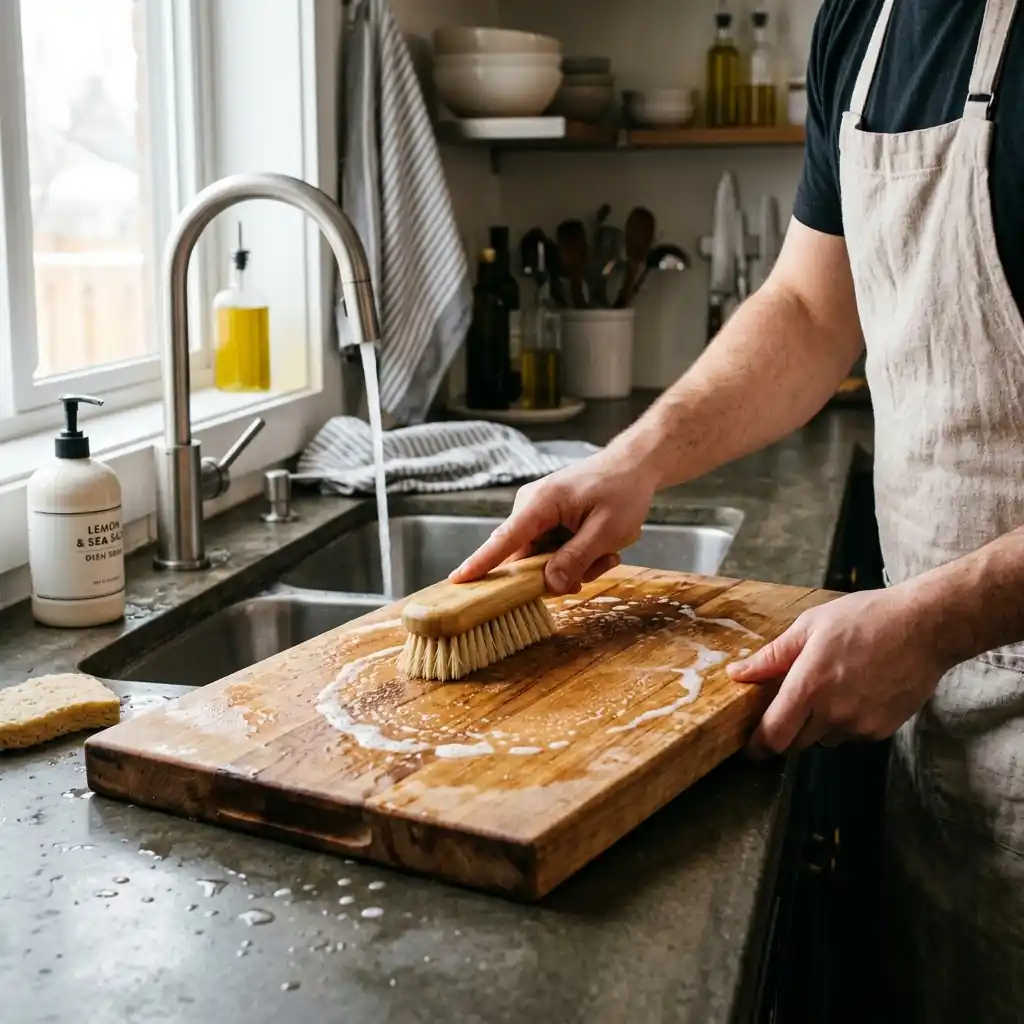
Protecting Your Kitchen Investment
A high-quality, thick wooden cutting board (especially an end-grain board) is one of the most beautiful and functional tools in a kitchen. Unlike glass or marble, wood is gentle on your knife blades, keeping them razor-sharp for much longer.
However, wood is a porous, organic material. If you treat it like a cheap plastic board, it will warp, crack, harbor bacteria, and eventually split down the middle. Proper cleaning and maintenance are non-negotiable.
Step-by-Step Daily Cleaning
The absolute cardinal rule of wooden cutting boards is this: Never, under any circumstances, put them in the dishwasher or leave them submerged in a sink full of water.
- Step 1: After chopping vegetables or bread, use a bench scraper or a damp cloth to wipe away the debris. A full wash isn't always necessary for dry ingredients.
- Step 2: After cutting raw meat, immediately carry the board to the sink. Use a sponge with hot water and dish soap to vigorously scrub the surface.
- Step 3: Rinse the board quickly under hot running water. Do not let it soak.
- Step 4: Immediately dry the board thoroughly with a clean kitchen towel.
- Step 5: Stand the board upright on its edge to dry completely. If you lay it flat on the counter while damp, moisture will become trapped underneath, leading to warping and mold.
- Step 6: For deep cleaning and removing stubborn odors (like garlic or onion), sprinkle the dry board generously with coarse Kosher salt. Cut a fresh lemon in half, and use the cut side of the lemon to aggressively scrub the salt into the wood, squeezing slightly to release the acidic juice. Let it sit for 5 minutes, then wipe clean with a damp cloth.
Monthly Maintenance (Oiling)
Every time you wash your board, you strip away natural oils. Over time, the wood dries out, becomes brittle, and drinks up liquid (like meat juices). You must rehydrate it.
- Once a month, ensure the board is bone dry. Pour a generous amount of food-grade mineral oil directly onto the wood.
- Never use olive oil or vegetable oil, as these will eventually go rancid and make your board smell awful.
- Use a paper towel to rub the mineral oil into every surface—top, bottom, and sides. Let it soak in overnight.
- The next morning, use a dry cloth to buff away any excess oil standing on the surface. Your board will look brand new and remain completely water-resistant.
A well-maintained wooden cutting board can literally be passed down through generations. Treat it with respect, and it will reward you with decades of service.