
Why You Need to Rest Your Meat
Cutting into a steak hot off the grill is a rookie mistake. Understand the science of resting meat to retain juices and ensure a tender bite.
The Biggest Mistake in Meat Cookery
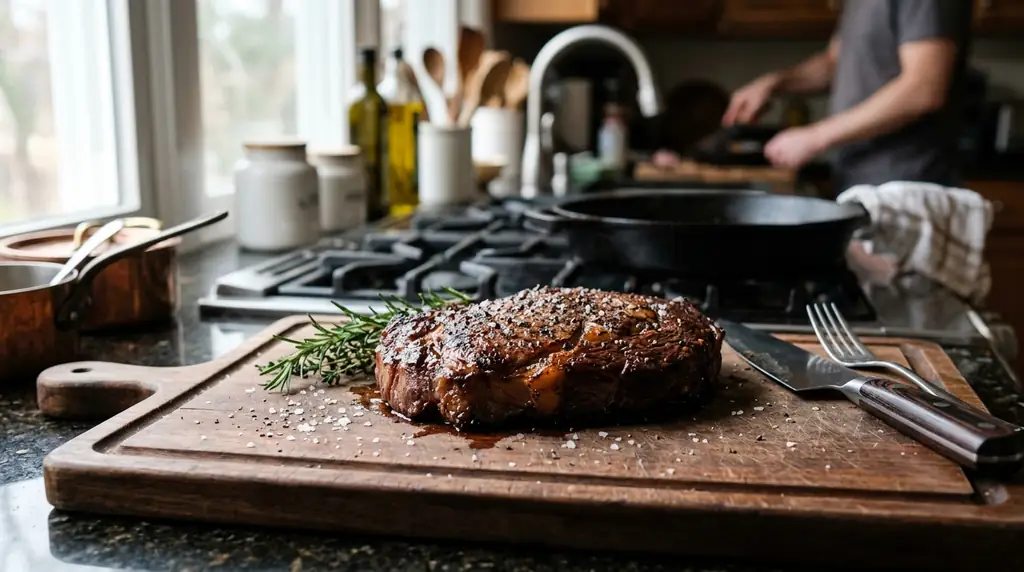
You've spent good money on a premium cut of steak, perfectly seared it to a beautiful medium-rare, and immediately transferred it to a cutting board to slice. As your knife glides through, a massive puddle of red juice floods the board.
By skipping the crucial resting phase, you have just drained the meat of its moisture. What is left on your plate will be dry, tough, and significantly less flavorful than it should have been. Resting meat is never optional.
The Science and the Steps
As meat cooks, the heat causes the muscle fibers to contract and tighten. This physical squeezing forces the moisture within the meat toward the cooler center. If sliced immediately, the concentrated juices have nowhere to go but out.
- Step 1: Remove the meat from the heat source when it is 5 to 10 degrees below your target internal temperature (carryover cooking will finish the job).
- Step 2: Transfer the meat immediately to a warm plate or a clean wooden cutting board.
- Step 3: If you are in a drafty kitchen, loosely tent a piece of aluminum foil over the meat to retain surface heat. Do not wrap it tightly, or you will ruin the crust you just built.
- Step 4: Set a timer based on the size of the cut. A standard chicken breast or steak needs 5 to 10 minutes.
- Step 5: For larger items like a whole roast chicken or pork loin, rest for 15 to 20 minutes.
- Step 6: For massive holiday centerpieces like a whole turkey or prime rib, rest for a minimum of 30 to 45 minutes before carving.
Why It Works
During the resting period, the muscle fibers begin to cool down and relax. As they relax, they slowly reabsorb the concentrated juices from the center, redistributing them evenly throughout the entire cut of meat.
- Resting ensures that when you finally slice the meat, the juices stay locked inside the muscle structure, ending up in your mouth instead of on the cutting board.
- It allows for carryover cooking, giving you a much more even edge-to-edge doneness without overcooking the exterior.
- It gives you time to finish your side dishes or prepare a quick pan sauce from the fond left in the skillet.
Patience is an essential ingredient in cooking. Give your meat the time it deserves to relax, and you will be rewarded with an incredibly tender and juicy meal.