
Coconut Milk vs. Coconut Cream vs. Coconut Water
Don't ruin your Thai curry with the wrong can. Learn the fundamental differences between these three distinct coconut products and how fat content dictates their use.
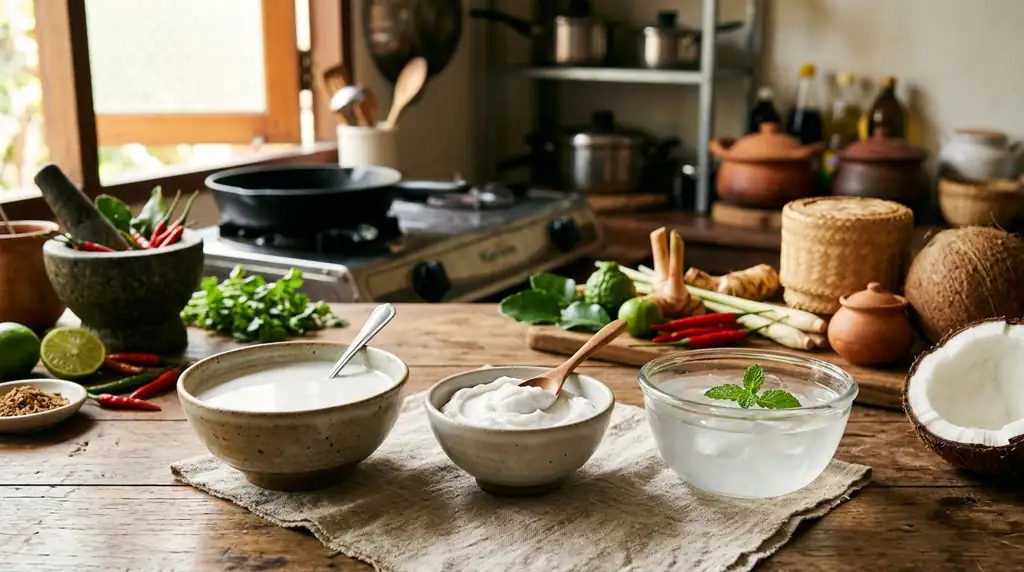
The Coconut Confusion
The coconut is a botanical marvel, capable of producing several entirely different culinary liquids. However, the nomenclature used on supermarket cans is often confusing, leading home cooks to buy the wrong product.
If a recipe for a rich Indian curry calls for "Coconut Milk" and you accidentally pour in a carton of "Coconut Water," you will end up with a watery, flavorless soup. If you use "Cream of Coconut," you will ruin the savory dish with overwhelming, sickening sweetness.
Coconut Water (The Hydrator)
This is the easiest to identify.
- Source: Coconut water is the naturally occurring, clear liquid found entirely inside a young, green, unripe coconut.
- Flavor and Texture: It is thin, clear, slightly sweet, and packed with electrolytes (potassium). It contains zero fat.
- Usage: It is strictly a beverage. You drink it straight or use it as a base for fruit smoothies. It is never used in cooking or curries.
Coconut Milk (The Culinary Workhorse)
Coconut milk does not exist naturally inside the coconut. It is a manufactured product.
- Source: It is made by taking the solid white meat (the flesh) of a mature, brown coconut, grating it, soaking it in hot water, and then straining the liquid through cheesecloth.
- Texture and Fat: The resulting liquid looks exactly like cow's milk. Standard canned coconut milk contains about 17% to 24% fat. (Note: "Lite" coconut milk is simply standard coconut milk heavily diluted with water. Never buy it; if you want less fat, buy the regular can and add water yourself).
- Usage: This is the absolute foundation of Southeast Asian cooking. It provides the creamy, rich, velvety broth for Thai Green Curries, Tom Kha soup, and rich Indian kormas.
Coconut Cream (The Heavy Hitter)
This is simply a much richer, thicker version of coconut milk.
- Source: It is made using the exact same grating and soaking process as coconut milk, but it uses significantly less water. Alternatively, if you let a can of full-fat coconut milk sit undisturbed, the thick cream will rise and solidify at the top; you can scoop this off to get coconut cream.
- Texture and Fat: It contains up to 25% to 30% fat. It is incredibly thick and paste-like.
- Usage: It is used for incredibly rich, dry curries (like Beef Rendang) or used in vegan baking as a 1-to-1 substitute for heavy whipping cream (it can be whipped into stiff peaks).
The Trap: Cream of Coconut
Do NOT confuse "Coconut Cream" with "Cream of Coconut" (like Coco Lopez).
- Cream of Coconut is coconut cream that has been heavily, aggressively sweetened with massive amounts of added sugar. It is a thick syrup.
- It is used exclusively for bartending (to make Piña Coladas) or sweet desserts. If you put it in a savory chicken curry, it will be inedible.
By reading the labels carefully and understanding the fat content, you ensure your curries are rich and your cocktails are sweet.