
How to Keep Bread Fresh Without the Fridge
The refrigerator is the absolute worst place to store bread. Learn the chemistry of starch retrogradation and how to preserve artisan loaves correctly.
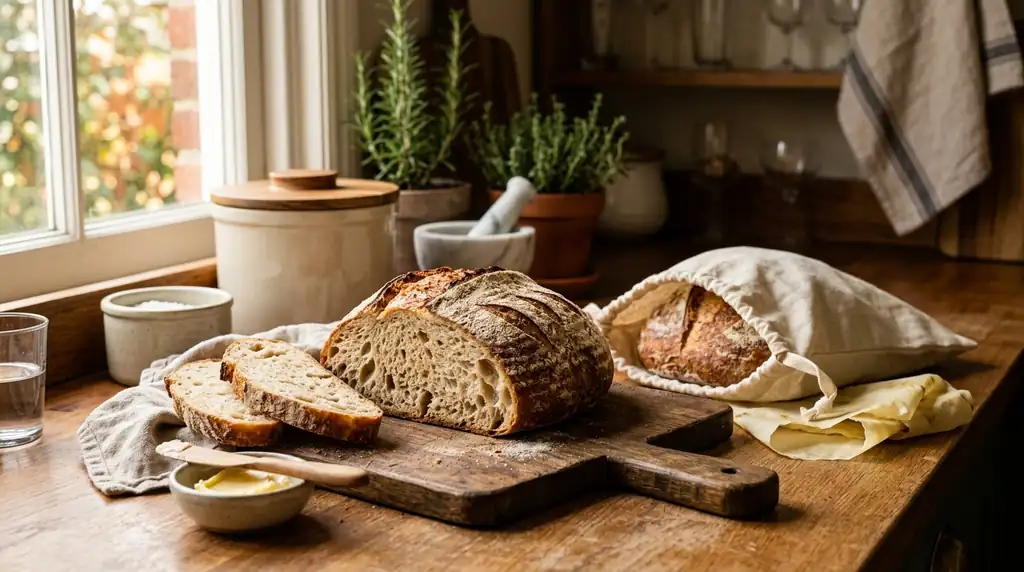
The Refrigerator Trap
It is a common misconception that putting bread in the refrigerator will extend its shelf life. People do this because the cold environment does indeed slow down the growth of mold. However, from a textural standpoint, the refrigerator is the absolute worst place you can put a loaf of bread.
Bread goes stale due to a chemical process called "starch retrogradation." When bread is baked, the starches absorb water and become soft and gel-like. As the bread sits, the starches slowly recrystallize, pushing the water out and turning the bread hard and dry. The temperature of a standard refrigerator (around 38°F) accelerates this recrystallization process exponentially. Bread stored in the fridge will go stale up to six times faster than bread left on the counter.
Proper Counter Storage (For Immediate Consumption)
If you plan to eat the loaf within 3 to 4 days, the counter is the only place it belongs.
- Commercial Sandwich Bread: This bread is packed with preservatives and fats (oils). It will survive perfectly fine in its original plastic bag on the counter for a week or more.
- Artisan Crusty Loaves (Sourdough, Baguettes): These contain no preservatives, just flour, water, salt, and yeast. Storing them in a plastic bag will trap moisture, ruining the beautiful crust and turning it rubbery. Instead, store them in a paper bag or a wooden bread box. This allows the crust to breathe while protecting the crumb from drying out instantly.
- The Cut Side Down Trick: When you slice an artisan loaf, do not store it in a bag. Simply place the uncut loaf back on the cutting board, balancing it directly on its cut side. The cutting board protects the exposed interior from the air, while the hard crust protects the rest of the loaf.
Long-Term Storage (The Freezer)
While the refrigerator destroys bread, the freezer preserves it perfectly.
- When temperatures drop below freezing, starch retrogradation halts entirely.
- Step 1: Slice the loaf before freezing. Trying to slice a frozen-solid boule of sourdough is dangerous and nearly impossible.
- Step 2: Wrap the sliced loaf tightly in plastic wrap, then place it in a heavy-duty freezer bag.
- Step 3: When you want toast, pull out individual slices and drop them directly into the toaster while still frozen solid. The intense heat of the toaster instantly thaws and crisps the bread, restoring it to a near fresh-baked state.
Never put bread in the fridge. Leave it on the counter for the week, and freeze the rest.