
Mise en Place: The Philosophy of Kitchen Organization
Discover the French organizational system that prevents kitchen chaos, reduces stress, and allows professional chefs to execute complex meals flawlessly.
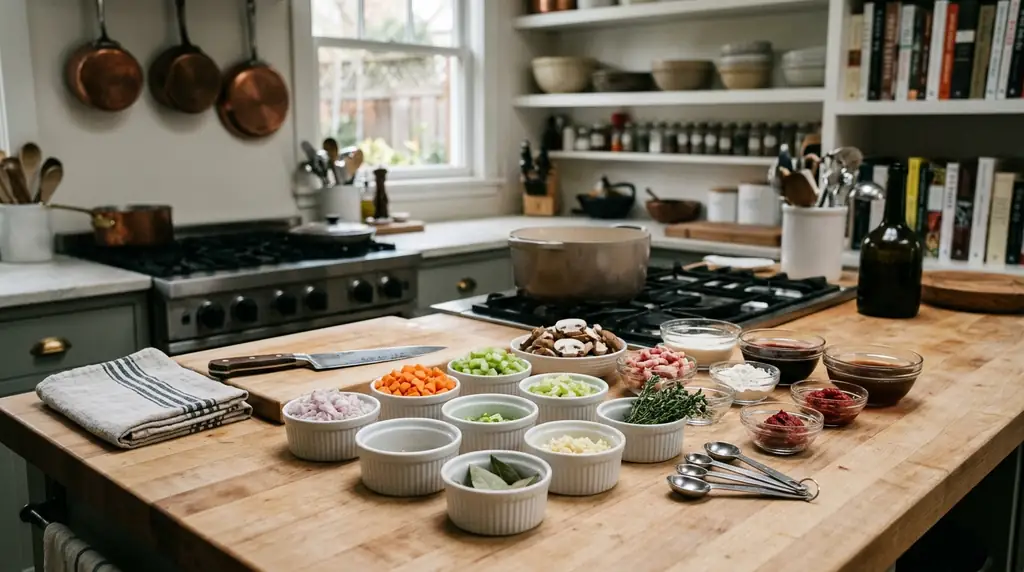
More Than Just Chopped Onions
Mise en place (pronounced "meez ahn plahs") is a French culinary phrase that translates directly to "everything in its place." In a professional kitchen, it refers to the rigid system of preparing and organizing all ingredients and tools before the actual cooking process begins.
However, true mise en place is not just a physical state; it is a mental state. It is a philosophy of total preparedness. When you embrace this mindset at home, you eliminate the frantic rushing, the burned garlic, and the overwhelming stress of trying to chop vegetables while a pan of meat is actively smoking on the stove.
The Chaos of the Unprepared Cook
The average home cook reads a recipe step-by-step as they cook. They put onions in a hot pan, and then read the next step: "Add minced garlic." They scramble to find a garlic clove, peel it, and mince it. By the time they finish, the onions are burnt.
- Cooking is a time-sensitive, thermal process. Food waits for no one.
- When you are disorganized, you make mistakes, you compromise safety with rushed knife work, and cooking feels like a stressful chore rather than a relaxing hobby.
Step-by-Step: Achieving Perfect Mise en Place
Implementing this system adds time to the beginning of your cooking process, but it drastically reduces the overall time and stress of the execution phase.
- Step 1: Read the entire recipe from start to finish. Understand the timeline, the techniques required, and identify any missing ingredients before you even turn on the oven.
- Step 2: Clear your workspace. Empty the dishwasher, wipe down the counters, and ensure you have a large, clean, uncluttered area to work in.
- Step 3: Gather your equipment. Pull out every pot, pan, whisk, spatula, measuring cup, and bowl you will need. Place them on the counter.
- Step 4: Gather your ingredients. Pull everything from the fridge and pantry. Group them logically (e.g., all the dry spices together, all the vegetables together).
- Step 5: Execute the knife work. Wash, peel, chop, dice, and mince every single ingredient. This is the most crucial step. Do not leave a single vegetable uncut.
- Step 6: Portion and containerize. Place the prepped ingredients into small glass bowls or ramekins (often called "prep bowls"). Measure out your liquids and spices into separate cups.
- Step 7: Clean your station. Wash the cutting board and knife, wipe down the counter, and organize your little bowls of ingredients in the exact order they will go into the pan.
- Step 8: Begin cooking. With everything perfectly prepped and organized, you can now focus 100% of your attention on the heat, the timing, and the flavor of the dish.
The Long-Term Benefits
Once you force yourself to adopt this system, you will never go back to chaotic cooking.
- It allows you to clean as you go. Because the prep is done, you have downtime while things simmer to wash dishes, meaning you finish cooking with an empty sink.
- It prevents critical errors, like realizing you are out of eggs halfway through making a cake batter.
- It makes cooking fun. You feel like the host of your own cooking show, effortlessly tossing pre-measured bowls of ingredients into a pan with professional grace.
Mise en place is the ultimate secret of the restaurant industry. It turns chaos into order and amateur cooks into calm, confident chefs.