
Organizing Your Fridge for Maximum Food Safety
Your refrigerator is not just a cold box; it is a complex microclimate. Learn the strict hierarchy of storage that prevents deadly cross-contamination.
The Danger of Random Placement
When returning from the grocery store, the instinct is to simply shove items into whatever empty space is available on the refrigerator shelves. This random placement is incredibly dangerous. The refrigerator is not a uniform temperature, and how you arrange raw ingredients directly dictates whether your food stays fresh or becomes a severe health hazard.
The golden rule of refrigerator organization is based entirely on the cooking temperature required to kill bacteria. The foods that require the highest temperatures to become safe (like raw chicken) must always be placed at the absolute bottom.
The Hierarchy of the Shelves
Follow this strict top-to-bottom order to guarantee safety.
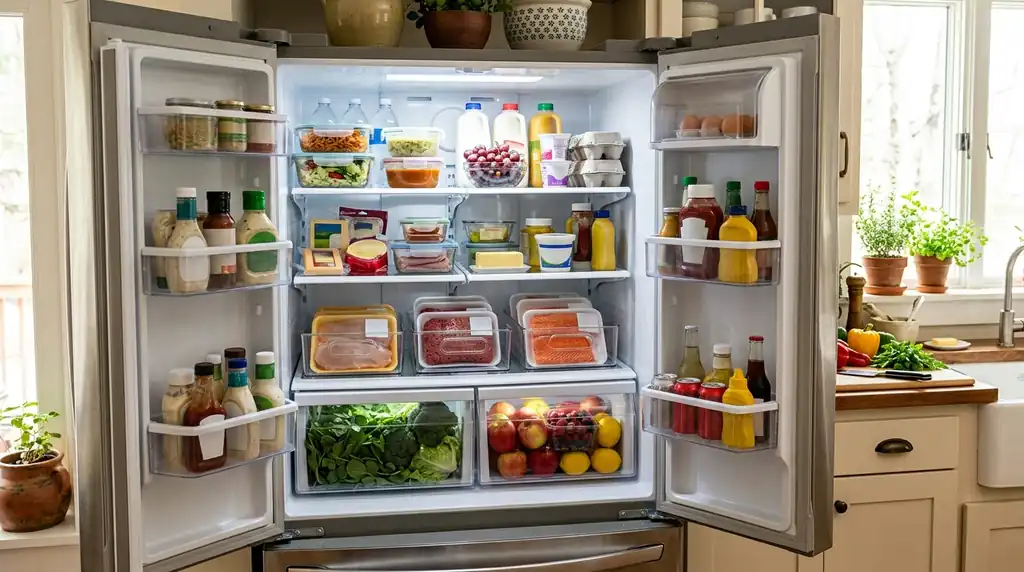
- The Upper Shelves (The Safe Zone): This is the warmest part of the fridge. Store foods here that require zero cooking before eating. This includes leftovers, beverages, deli meats, yogurt, and fresh berries.
- The Middle Shelves: Store dairy products (cheese, milk, butter) and eggs here. Note: Never store milk or eggs in the refrigerator door; the door is the warmest part of the fridge and fluctuates wildly in temperature every time it is opened. The door is only for highly stable condiments.
- The Bottom Shelf (The Danger Zone): This is the coldest part of the fridge, and it is strictly reserved for raw proteins. If raw meat leaks, it will drip onto the floor, not onto the salad below it.
- The Meat Order: Even within the raw meat shelf, there is a hierarchy. Store whole fish on top, whole cuts of beef/pork in the middle, ground meats below that, and raw poultry (chicken/turkey) on the absolute bottom layer.
The Crisper Drawers
Most refrigerators have two drawers. Do not just throw all produce into them blindly.
- High Humidity Drawer: Keep the vent closed. This traps moisture. Use this for thin-skinned, leafy vegetables that wilt easily (lettuce, spinach, herbs, broccoli).
- Low Humidity Drawer: Keep the vent open. This allows air to circulate and moisture to escape. Use this for thick-skinned fruits and vegetables that emit ethylene gas (apples, pears, avocados, peppers).
By organizing your fridge by cooking temperature, you create a fail-safe system against foodborne illness.