
How to Prevent Cross-Contamination
Food safety is the absolute priority in any kitchen. Learn the strict protocols professionals use to prevent dangerous bacteria from ruining a meal.
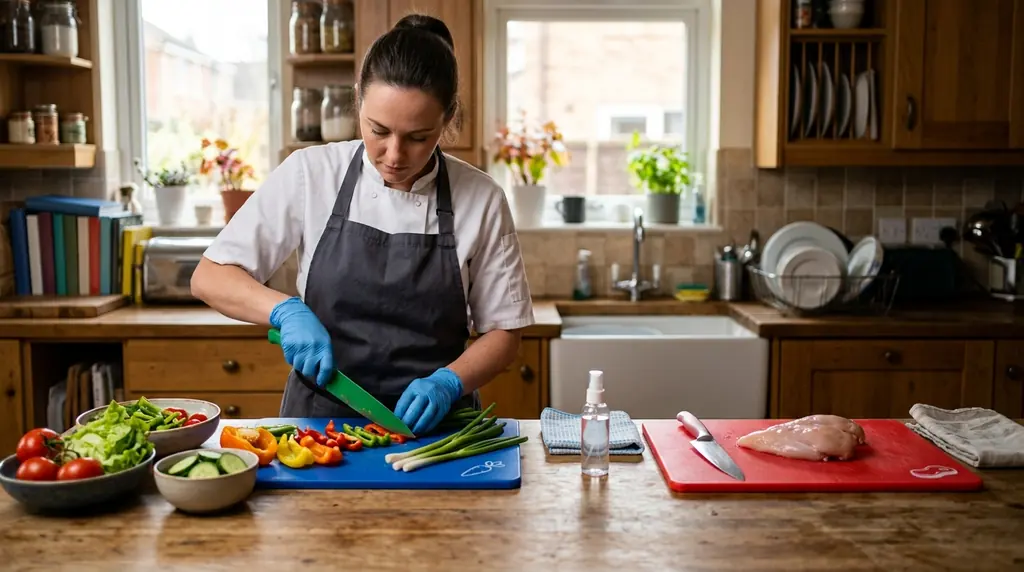
The Invisible Threat
You can execute the most complex, Michelin-star recipe perfectly, but if you mishandle the raw ingredients during preparation, you run the risk of severely sickening your guests. In a professional kitchen, food safety is not a suggestion; it is a rigid, non-negotiable law.
Cross-contamination occurs when harmful bacteria (like Salmonella or E. coli) from raw foods (typically meat, poultry, or eggs) are transferred to ready-to-eat foods (like fresh salads, bread, or cooked meats) via unwashed hands, cutting boards, or utensils.
The Hierarchy of the Refrigerator
Cross-contamination often happens before you even start cooking. How you store food in your refrigerator is your first line of defense.
- Never place raw meat on the top shelf. If a package of chicken leaks, the juices will drip down, contaminating everything below it.
- Top Shelf: Ready-to-eat foods, leftovers, drinks, and dairy.
- Middle Shelves: Unwashed produce, sealed condiments, and deli meats.
- Bottom Shelf: This is strictly reserved for raw proteins. Place raw meat on a rimmed baking sheet or plastic tray to catch any potential drips.
- Order of the Bottom Shelf: Arrange raw meat based on cooking temperature. Fish on top, whole cuts of beef/pork below that, ground meats below that, and raw poultry (which requires the highest cooking temperature to be safe) on the absolute bottom.
Step-by-Step Kitchen Protocols
When preparing a meal, you must treat raw meat like hazardous material.
- Step 1: Color-coded boards. Ideally, use a red plastic cutting board exclusively for raw meat, and a wooden or green board exclusively for vegetables. Never use the same board for both without a heavy wash with bleach or hot soapy water in between.
- Step 2: The Two-Hand Rule. When breading chicken (flour, egg, breadcrumbs), designate one hand as the "wet hand" (touching the raw chicken and egg) and the other as the "dry hand" (touching only the flour and breadcrumbs). This prevents your fingers from turning into giant, gummy, contaminated clubs.
- Step 3: Wash your tools immediately. The knife used to chop raw chicken must be placed directly into the sink and washed. Do not leave it on the counter where you might accidentally grab it to slice a tomato.
- Step 4: Never wash raw chicken. Rinsing poultry under the sink does not kill bacteria; it simply splashes aerosolized salmonella across your countertops, sponges, and clean dishes.
- Step 5: The Platter Rule. Never, ever put cooked meat back onto the same plate or platter that held the raw meat. When grilling, you must bring a fresh, clean plate outside to retrieve the finished burgers.
- Step 6: Hand washing. Rinse your hands with hot water and soap for a full 20 seconds after touching raw meat, eggs, or unwashed produce. A quick splash of cold water is entirely useless.
Temperature Danger Zone
Bacteria double in number every 20 minutes when left in the "Danger Zone."
- The Danger Zone is defined as temperatures between 40°F (4°C) and 140°F (60°C).
- Never thaw meat by leaving it on the counter all day. The exterior of the meat will reach room temperature (the Danger Zone) and rapidly breed bacteria while the center remains frozen. Always thaw meat overnight in the refrigerator.
- Hot food must be held hot (above 140°F), and cold food must be held cold (below 40°F). Do not leave potato salad sitting in the sun at a picnic.
By implementing these strict sanitation habits, you protect your family and ensure that your cooking is remembered for its flavor, not the aftermath.