
Mastering the Perfect Hard-Boiled Egg
Say goodbye to rubbery whites and green rings around the yolk. Follow this precise timing chart and ice bath method for eggs that peel effortlessly every time.
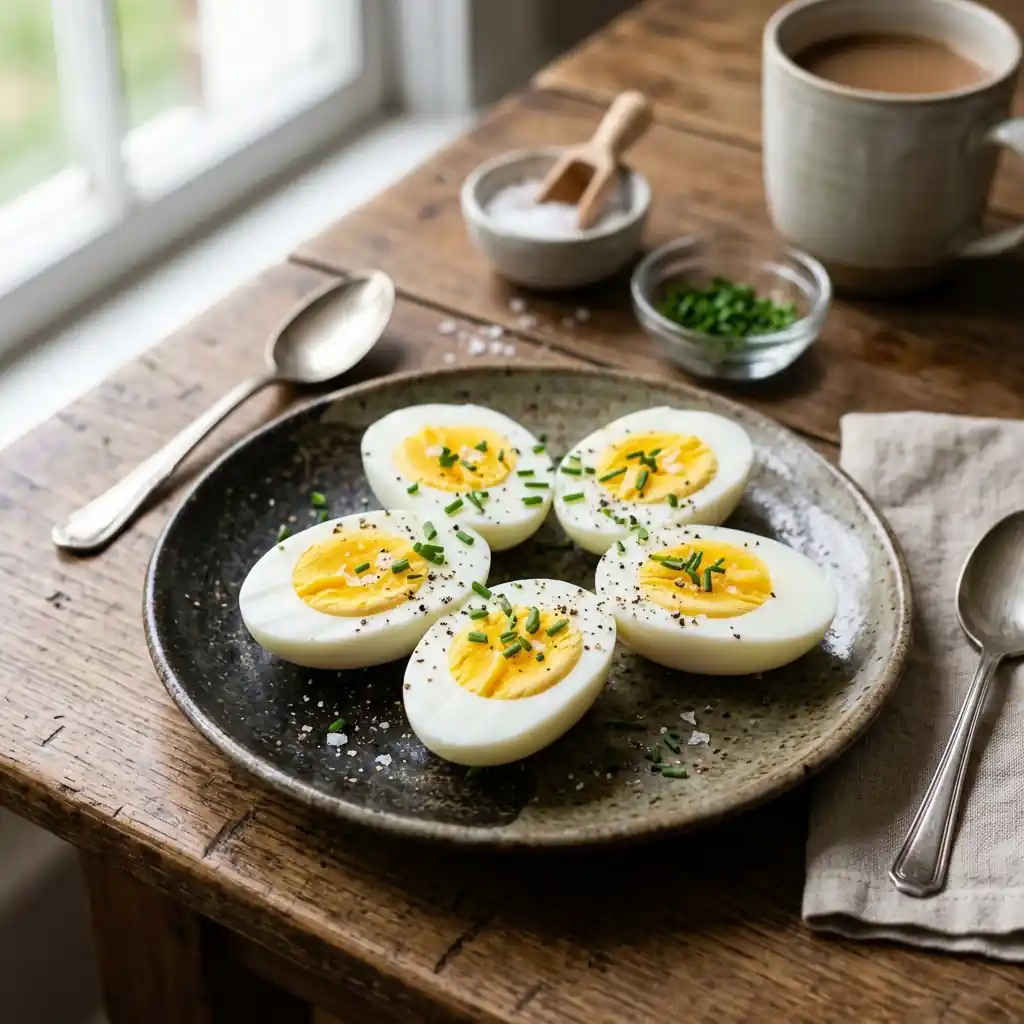
The Myth of the Boiling Egg
Despite the name, you should never actually "boil" a hard-boiled egg. Subjecting eggs to a violent, rolling boil causes them to bounce around and crack, and the extreme heat forces the sulfur in the egg white to react with the iron in the yolk.
This chemical reaction is exactly what creates that unappetizing, chalky, gray-green ring around the yolk, accompanied by a distinct sulfurous smell. A perfect hard-boiled egg should have a smooth, tender white and a bright, creamy yellow yolk.
Step-by-Step Flawless Eggs
To achieve perfection and ensure the eggs peel easily without tearing the whites to shreds, you must use precise timing and temperature control.
- Step 1: Do not use farm-fresh eggs. Fresh eggs have a low pH, causing the inner membrane to act like superglue against the shell. Use eggs that have been in your fridge for at least a week or two.
- Step 2: Bring a large pot of water to a rolling boil. Use enough water to completely submerge the eggs by at least an inch.
- Step 3: Carefully lower the cold eggs straight from the fridge into the boiling water using a slotted spoon. (Starting them in cold water bonds the membrane to the shell, making peeling a nightmare; always start in hot water).
- Step 4: Immediately lower the heat to a gentle simmer. You want small bubbles, not a violent boil.
- Step 5: Set a timer based on your preference: 6 minutes for a liquid runny yolk, 7 minutes for a jammy sticky yolk, 9 minutes for a firm but creamy hard-boiled yolk. Never exceed 11 minutes.
- Step 6: While the eggs cook, prepare a large bowl filled with cold water and ice cubes.
The Crucial Ice Bath
The moment your timer goes off, you must act quickly to stop the cooking process and manipulate the shell.
- Transfer the eggs directly from the hot water into the ice bath. Let them sit submerged for at least 5 to 10 minutes.
- This extreme temperature shock causes the egg inside to physically contract, pulling away from the shell membrane.
- When ready to peel, gently tap the egg all over on the counter to shatter the shell into a web of cracks, then peel it under a stream of cold running water. The water will slip underneath the membrane, allowing the shell to slide off effortlessly in large pieces.
Follow this method strictly, and you will never serve a rubbery, green-ringed, mangled egg again.