
Navigating Potatoes: Starchy, Waxy, and All-Purpose
Why did your potato salad turn into mashed potatoes? Why did your fries turn out soggy? You bought the wrong potato. Understand the starch spectrum.
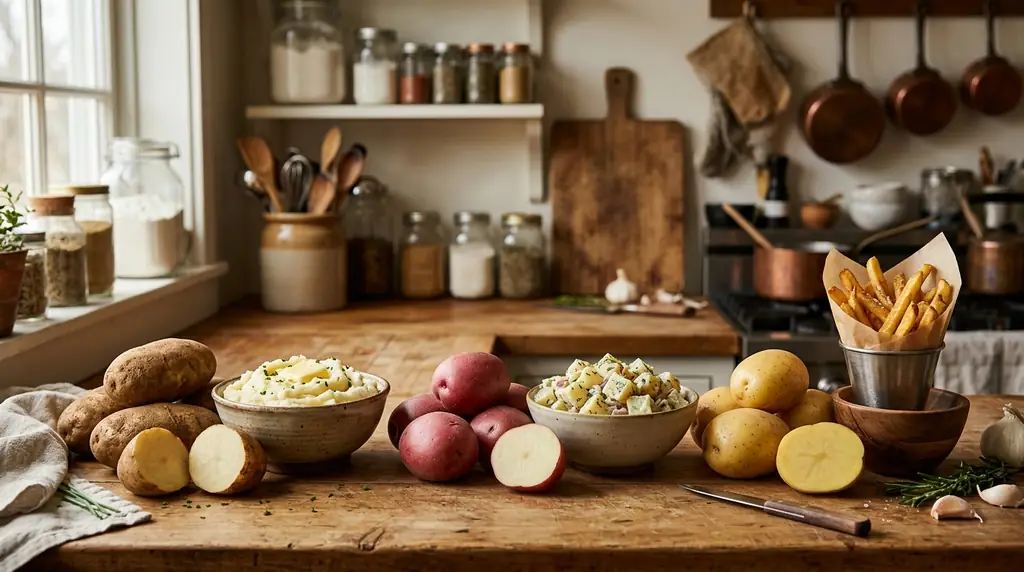
The Potato Spectrum
The potato is one of the most versatile vegetables on the planet, capable of being mashed into a fluffy cloud, fried into a crispy spear, or boiled into a firm salad component. However, a potato is not just a potato.
If you try to make French fries with a red potato, they will be soggy and flabby. If you try to make a potato salad with a Russet potato, it will disintegrate into a mushy paste. The culinary destiny of a potato is entirely determined by its ratio of starch to moisture.
The Starchy Potatoes (The Fluffers)
These potatoes are high in starch and very low in moisture. The classic example is the large, brown-skinned Russet (or Idaho) potato.
- The Chemistry: Because they lack moisture, the cells of the potato swell and burst easily when cooked, resulting in a dry, mealy, incredibly fluffy texture.
- Mashing: They are the absolute best choice for mashed potatoes. They break down effortlessly, and their dry texture acts like a sponge, allowing them to absorb massive amounts of butter and heavy cream without becoming a watery glue.
- Frying and Baking: They are mandatory for French fries and baked potatoes. The high starch content crisps up beautifully in hot oil or a hot oven, while the interior remains light and fluffy as a cloud.
- The Warning: Never use Russets for a potato salad or a soup. They will immediately fall apart and dissolve into mush.
The Waxy Potatoes (The Holders)
These potatoes are low in starch and very high in moisture. Classic examples include Red Bliss, New Potatoes, and Fingerlings.
- The Chemistry: Because they are low in starch, the cells remain tightly bound together even after prolonged boiling. They possess a dense, creamy, slightly slick (waxy) texture.
- The Usage: They are the absolute best choice for any dish where the potato needs to hold its physical shape. They are mandatory for potato salads, scalloped potatoes (gratin), and hearty stews.
- The Warning: Never use waxy potatoes for mashing (they will turn into a heavy, gluey paste) and never use them for frying (the high moisture content will prevent them from ever getting crispy).
The All-Purpose Potatoes (The Middle Ground)
These potatoes sit right in the middle of the spectrum, offering a medium starch and medium moisture content. The most famous example is the Yukon Gold.
- The Usage: Yukon Golds are the ultimate utility player in the kitchen. While a Russet makes a fluffier mash, a Yukon Gold makes a denser, richer, naturally buttery mash. They hold their shape reasonably well in a soup, and they roast beautifully.
- If you can only buy one bag of potatoes for the week to handle multiple different recipes, buy Yukon Golds.
By identifying the starch content of the potato in the bin, you can guarantee the texture of your final dish will be flawless.