
The Ultimate Guide to Roasting Vegetables
Transform bland veggies into caramelized, crispy perfection. Learn the correct temperatures, oil ratios, and why you should never crowd the pan.
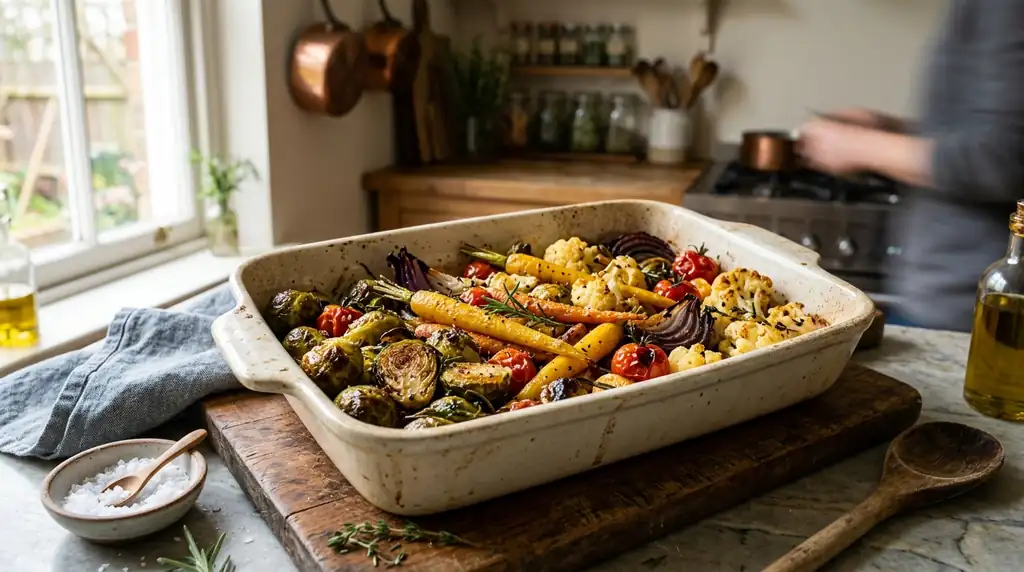
The Secret to Crispy, Caramelized Veggies
Boiled and steamed vegetables have their place in the kitchen, but nothing transforms a bland root vegetable quite like high-heat roasting. The process evaporates excess water and triggers the Maillard reaction, yielding vegetables that are incredibly sweet, tender on the inside, and blistered and crispy on the outside.
However, many home cooks complain that their oven-roasted vegetables always turn out mushy or waterlogged. This is rarely the fault of the vegetable; it is almost always the result of a crowded pan or an oven that simply wasn't hot enough.
Step-by-Step Roasting Guide
This technique applies universally to almost any sturdy vegetable, from broccoli and Brussels sprouts to carrots and potatoes.
- Step 1: Pre-heat your oven aggressively. Set it to 425°F (220°C). For extremely dense vegetables like potatoes, you can even push it to 450°F (230°C).
- Step 2: Chop your vegetables into perfectly uniform pieces. If some pieces are large and some are small, the small ones will burn to ash before the large ones are cooked through.
- Step 3: Toss the vegetables in a large bowl with enough high-smoke-point oil (like avocado or light olive oil) to generously coat every surface. They should look glossy, not dry.
- Step 4: Season aggressively with Kosher salt, freshly ground black pepper, and any dry spices (like smoked paprika or garlic powder).
- Step 5: Spread the vegetables onto a heavy, dark metal baking sheet. You must leave space between every single piece of vegetable.
- Step 6: Roast undisturbed for 15 to 20 minutes before checking. Use a thin metal spatula to flip them only once they have developed a dark, crusty sear on the bottom side.
Crucial Mistakes to Avoid
If you find your vegetables are turning to mush, you are likely making one of these classic errors.
- Overcrowding the pan. As vegetables heat up, they release massive amounts of steam. If they are packed tightly together, that steam gets trapped, and you end up steaming your vegetables instead of roasting them.
- Using parchment paper or silicone mats. While these make cleanup easy, they insulate the pan and prevent the vegetables from achieving a deep, crispy sear against the hot metal.
- Not using enough oil. The oil is what conducts the heat from the pan into the vegetable. Without it, the vegetables will just dry out and burn.
Mastering the art of roasting will make vegetables the star of the dinner table rather than an obligatory side dish.