
Steak Cuts Explained: Ribeye, Striploin, and Tenderloin
Stop blindly buying the most expensive steak in the butcher case. Learn how the anatomy of the cow dictates the tenderness, fat content, and cooking method for the perfect steak.
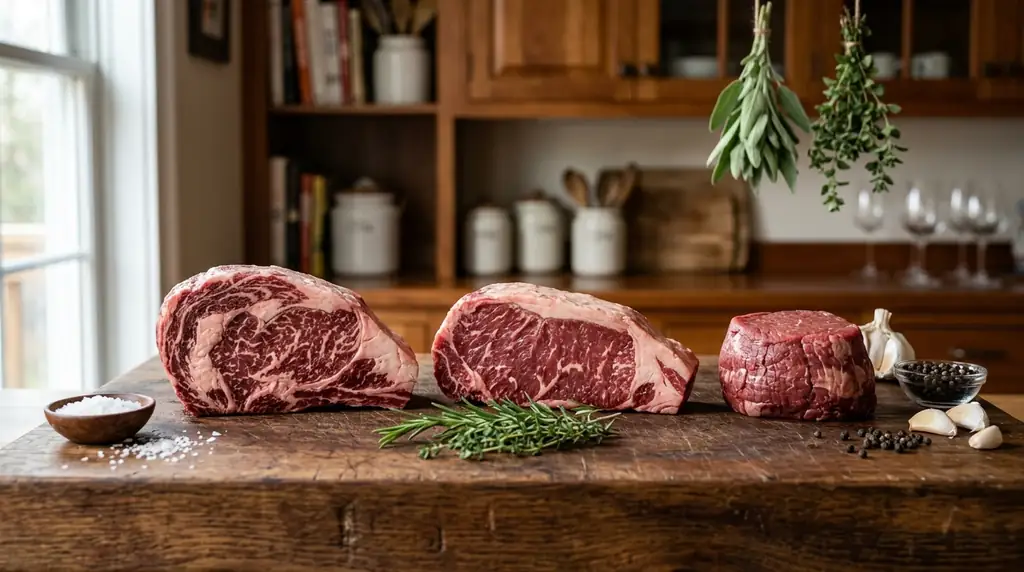
The Rule of the Muscle
When looking at a butcher counter, the prices can be wildly confusing. The fundamental rule of beef is simple: the more a muscle works during the cow's life, the tougher and more flavorful it will be. The less a muscle works, the tenderer and milder it will be.
Muscles from the shoulder (chuck) or the leg (round) work constantly, developing thick connective tissue. They must be braised low and slow for hours to become edible. The premium "steakhouse" cuts all come from the back of the cow (the rib and the loin), an area that does very little physical work.
The Tenderloin (Filet Mignon)
This is the most expensive cut of meat on the cow, but not necessarily the best.
- Anatomy: A long, cylindrical muscle tucked deep inside the loin. It literally does zero work during the cow's life.
- Texture and Flavor: It is incredibly, almost spreadably tender. You can cut it with a butter knife. However, because it does no work, it has almost zero intramuscular fat (marbling) and very little beefy flavor.
- How to cook it: Because it lacks fat, it will dry out instantly if overcooked. It must be seared very quickly in a ripping hot pan (preferably basted with butter) and served rare or medium-rare. It is often served with a heavy pan sauce (like Peppercorn or Bearnaise) to compensate for its lack of natural flavor.
The Ribeye
This is the chef's favorite steak.
- Anatomy: Cut from the rib section. It is actually composed of multiple muscles, most notably the central "eye" and the highly prized "cap" (spinalis dorsi) which wraps around the outside.
- Texture and Flavor: It contains massive amounts of intramuscular fat (the white web of marbling) and a thick kernel of fat in the center. When this fat renders during cooking, it bastes the meat from the inside out, resulting in the richest, juiciest, most intensely beefy flavor possible.
- How to cook it: Ribeyes are forgiving. They can handle high heat grilling or cast-iron searing. Because of the heavy fat content, they are often best served Medium-Rare to Medium, giving the thick fat time to fully melt and render.
The Striploin (New York Strip)
The perfect middle ground between the Tenderloin and the Ribeye.
- Anatomy: Cut from the short loin (just behind the ribs).
- Texture and Flavor: It has a tighter grain and is slightly chewier than a ribeye, but offers a fantastic, bold, robust beef flavor. It usually features a thick band of fat running down one side (which should be rendered in the pan first) but less internal marbling than a ribeye.
- The T-Bone / Porterhouse: If you leave the bone in the short loin, you get a T-Bone steak. A T-Bone is literally a New York Strip on one side of the bone, and a small piece of Tenderloin on the other side. A Porterhouse is just a T-Bone cut from further back, meaning it has a much larger portion of Tenderloin.
If you want maximum tenderness, buy the Filet. If you want maximum flavor, buy the Ribeye. If you want a balanced, classic steakhouse experience, buy the Strip.