
Storing Flour and Sugar to Prevent Pests
The paper bags your baking staples come in are invitations for disaster. Learn why airtight storage is mandatory to protect against humidity and pantry weevils.
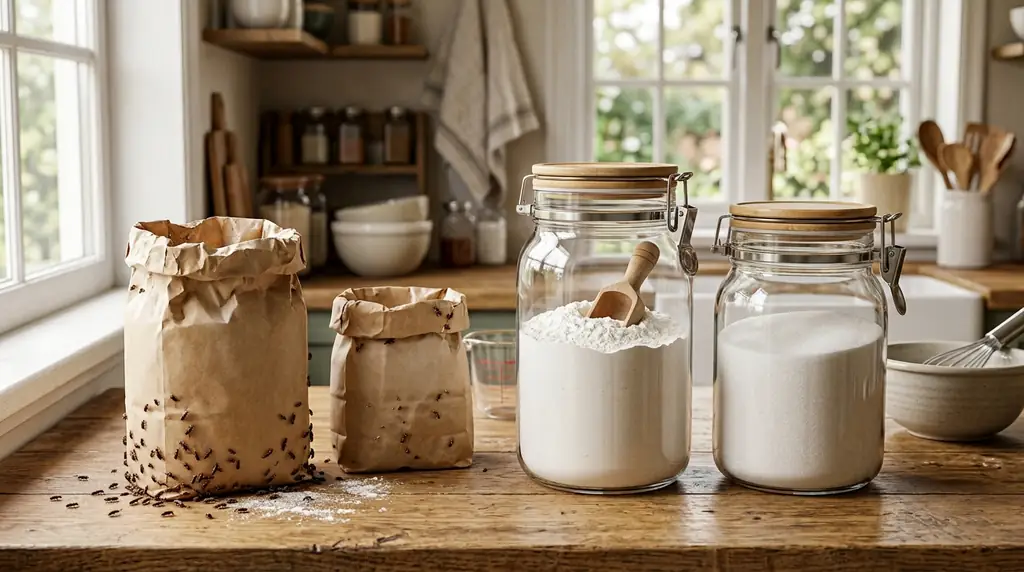
The Vulnerability of the Paper Sack
Almost all flour and granulated sugar sold in supermarkets is packaged in folded paper sacks. While this packaging is cheap and environmentally friendly, it is absolutely terrible for long-term storage in a home kitchen.
Paper offers zero protection against the two greatest enemies of dry baking goods: high humidity and insect infestations. If you simply roll the top of the paper bag down and shove it into the back of your pantry, you are risking a massive mess and a ruined batch of cookies.
Enemy #1: Humidity and Odors
Flour and sugar are highly hygroscopic, meaning they act like sponges, eagerly absorbing moisture and odors from the surrounding air.
- If your kitchen gets humid (from boiling water or summer weather), the flour will absorb the water vapor. This causes the flour to clump, throw off your precise baking measurements, and eventually develop mold.
- Flour is also an odor sponge. If you store a paper bag of flour next to a pungent spice rack or a bag of onions, your next vanilla cake will taste faintly of garlic.
Enemy #2: The Pantry Weevil
This is the nightmare scenario.
- Flour naturally contains microscopic insect eggs (flour beetles and weevils) from the agricultural milling process. This is entirely unavoidable and harmless if managed correctly.
- However, if the flour sits in a warm, dark pantry for months, those eggs will hatch. The insects will rapidly multiply, chew straight through the paper bag, and infest every other dry grain (rice, pasta, cereal) in your entire kitchen.
- To prevent this, you must control the environment.
The Proper Storage Protocols
To protect your investment and your sanity, follow these strict rules.
- Step 1: The Initial Freeze. The absolute best practice is to place the entire paper bag of newly purchased flour directly into the freezer for 48 hours. The sub-zero temperatures will completely destroy any microscopic eggs, guaranteeing the flour is sterile.
- Step 2: The Airtight Transfer. After the freeze, remove the flour from the paper bag immediately. Transfer it into a heavy-duty, airtight container. Hard plastic bins with silicone gaskets (like OXO containers) or large glass jars are perfect. This physical barrier prevents moisture, odors, and any outside pests from entering.
- Whole Wheat Flour Rule: Whole wheat flour contains the natural oils of the wheat germ. These oils go rancid quickly at room temperature. Whole wheat flour (and almond flour) MUST be stored permanently in the freezer or refrigerator in an airtight container.
By ditching the paper bags and investing in airtight containers, you guarantee your pantry remains pristine and pest-free.