
Understanding Different Types of Flour
Bread flour, cake flour, pastry flour, 00 flour—what does it all mean? Learn how protein content dictates the structure of your baking.
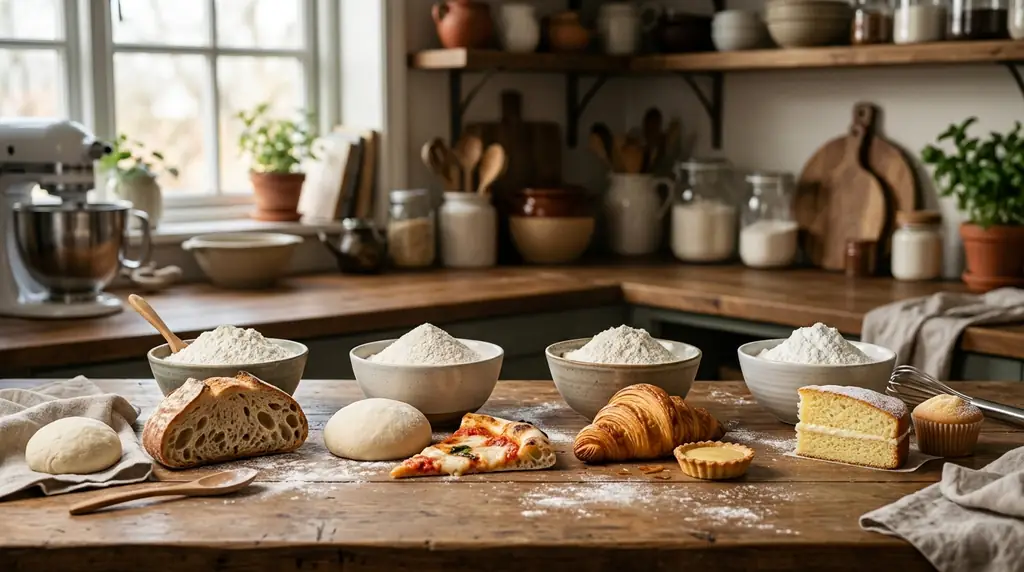
The Protein Spectrum
To the untrained eye, the baking aisle is a confusing wall of identical white powders. However, substituting one type of flour for another will completely alter the texture and structure of your baked goods. The defining characteristic of all wheat flour is its protein content.
When flour mixes with water, its proteins (glutenin and gliadin) bind together to form gluten. Gluten is the elastic network that provides structure and chewiness. Therefore, a high-protein flour will yield a tough, chewy product, while a low-protein flour will yield a tender, crumbly product.
The Core Flour Varieties
Understanding the protein percentages allows you to choose the exact right tool for your baking project.
- Cake Flour (5% - 8% Protein): This is the lowest protein flour available. It is heavily milled and often bleached to weaken the proteins further. It absorbs liquid and sugar rapidly, resulting in an incredibly fine, soft, and tender crumb. Use exclusively for delicate sponge cakes, angel food cakes, and highly tender biscuits.
- Pastry Flour (8% - 9% Protein): Slightly stronger than cake flour. It provides enough structure to hold a shape but remains exceedingly tender and flaky. It is the gold standard for pie crusts, tarts, and delicate cookies.
- All-Purpose Flour (10% - 12% Protein): The reliable workhorse of the kitchen. It is formulated to be a middle ground, possessing enough protein to bake a decent loaf of rustic bread, but low enough protein to make an acceptable chocolate chip cookie. If a recipe just says "flour," this is what they mean.
- Bread Flour (12% - 14% Protein): This is hard wheat flour designed for maximum gluten development. The high protein content allows the dough to stretch massively without tearing, trapping yeast gases to create high-rising, chewy artisan loaves, bagels, and pizza crusts.
Specialty Flours
Beyond the basic spectrum, there are specialized flours designed for very specific culinary traditions.
- Italian 00 Flour (Tipo 00): The "00" refers to the incredibly fine, powder-like milling process, not the protein content (which is usually around 11-12%). This ultra-fine grind allows the dough to absorb water perfectly, resulting in the stretchy, supple dough required for authentic Neapolitan pizza and fresh pasta.
- Self-Rising Flour: This is simply a lower-protein all-purpose flour that has baking powder and salt pre-mixed into it. It is heavily used in Southern US cooking for quick biscuits and pancakes. Never substitute it in a yeast bread recipe.
- Whole Wheat Flour: This flour contains the entire wheat berry, including the fibrous bran and the oil-rich germ. The sharp edges of the bran actually cut through gluten strands during kneading, which is why 100% whole wheat bread is often dense and heavy. (Pro-tip: Mix it 50/50 with bread flour for a lighter loaf).
By selecting flour based on its protein content, you take absolute control over the texture of your baking, ensuring your cakes are tender and your breads are chewy.