
The Sugar Spectrum: Granulated, Caster, Brown, and Raw
Substituting different types of sugar isn't just about flavor; it alters the chemistry of baking. Understand how crystal size and molasses content dictate your cookies.
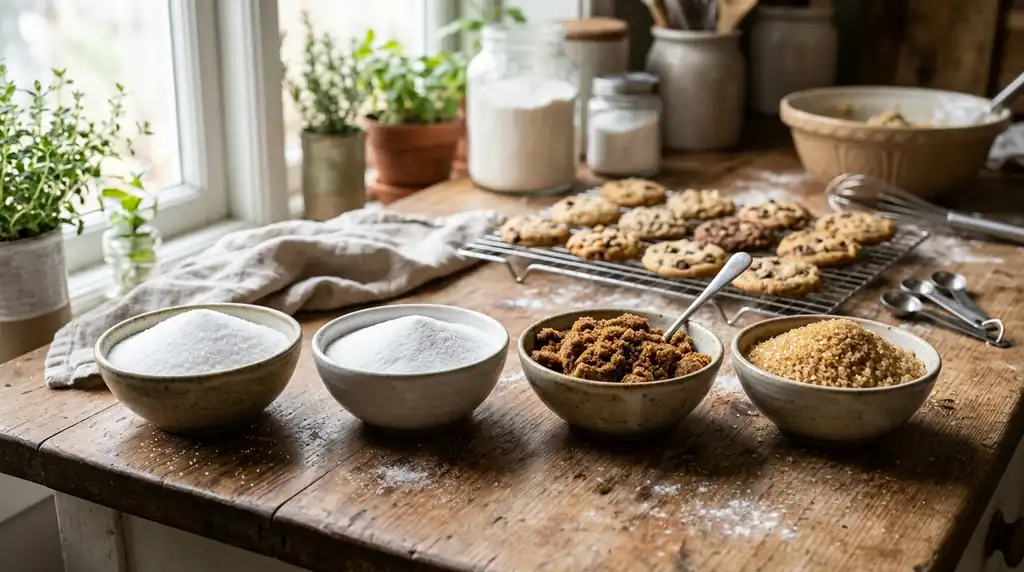
The Chemistry of Sweetness
Sugar does much more than just make things sweet. In baking, sugar is a structural ingredient. It locks in moisture (keeping cakes soft), it caramelizes (creating brown, crispy edges), and its sharp crystals act like tiny knives, cutting into butter to trap air during the "creaming" process.
Because sugar plays a mechanical role, you cannot simply swap a coarse sugar for a fine sugar without altering the final texture of the baked good. Understanding the different varieties is crucial for baking success.
The White Sugars (Refined)
These sugars have had 100% of the natural molasses removed during the refining process, leaving pure sucrose.
- Granulated Sugar: The standard table sugar. The crystal size is a medium gauge. It is the workhorse of American baking, perfect for creaming with butter and dissolving into liquids.
- Caster Sugar (Superfine Sugar): Very common in British recipes. The crystals are ground much finer than granulated sugar. Because the crystals are small, it dissolves almost instantly. It is mandatory for making delicate meringues, where large sugar crystals would weigh down the egg white foam and remain gritty.
- Powdered Sugar (Confectioners' Sugar or Icing Sugar): This is sugar pulverized into a microscopic dust. Critically, commercial powdered sugar contains about 3% cornstarch to prevent it from turning into a solid brick in humid weather. Because of the cornstarch, you cannot substitute it for granulated sugar in a cake batter. Use it strictly for frostings, glazes, and dusting.
The Brown Sugars (Moisture and Acid)
Brown sugar is simply refined white sugar that has had molasses added back into it.
- Light vs. Dark Brown Sugar: The only difference is the amount of molasses (Light has about 3.5%, Dark has about 6.5%). Dark brown sugar will yield a slightly deeper, more caramel-forward flavor, but they are interchangeable in recipes.
- The Chemistry: The molasses in brown sugar makes it hygroscopic (it holds onto moisture tightly), which results in soft, chewy cookies. Furthermore, molasses is acidic. This acidity reacts with baking soda (a base) to create leavening gases.
The Raw Sugars (Crunch and Garnish)
These sugars are partially refined, retaining a small amount of the natural molasses from the sugarcane.
- Turbinado (Sugar in the Raw): These are very large, coarse, pale golden crystals. Because the crystals are so large, they do not dissolve easily in batters. They are used exclusively as a finishing sugar, sprinkled on top of muffins or pie crusts before baking to provide a distinct, crunchy texture.
- Demerara: Similar to Turbinado, but with slightly larger, stickier crystals and a more pronounced toffee flavor. Popular for sweetening coffee.
By matching the crystal size to the culinary application, you ensure your meringues are smooth, your cakes are light, and your muffins have the perfect crunchy top.