
Mirin Explained: The Secret to Japanese Glazes
It is the backbone of Teriyaki sauce and the secret to a beautiful gloss on grilled fish. Understand what Mirin is, and why the cheap supermarket version is deceiving you.
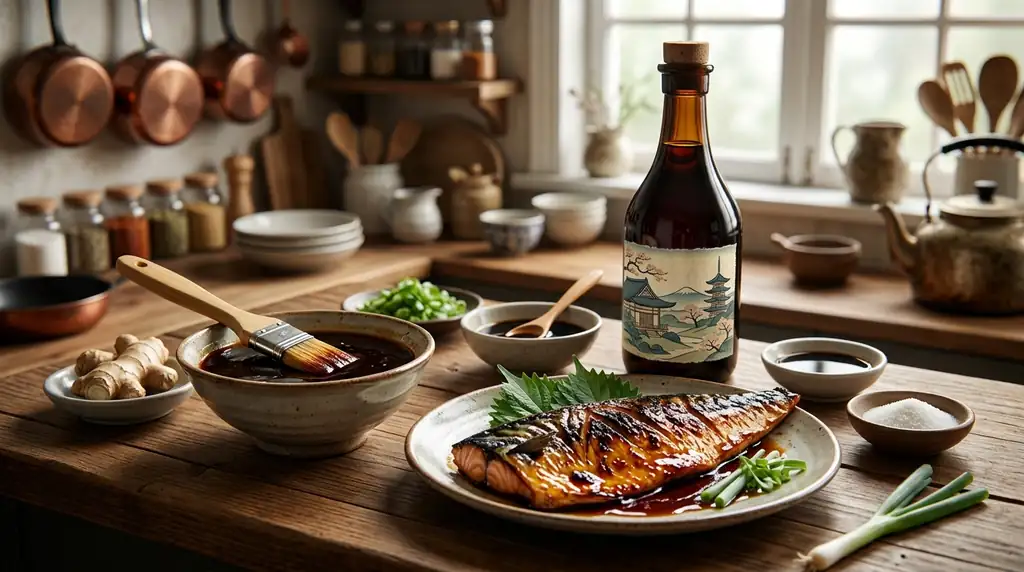
The Trinity of Japanese Flavor
Almost all traditional Japanese savory cooking is built upon a foundation of three ingredients: Soy Sauce (for salt and umami), Dashi (for savory oceanic depth), and Mirin (for sweetness and luster). If you attempt to cook Japanese food at home without Mirin, the dishes will always taste slightly flat and lack the beautiful, glossy shine characteristic of restaurant dishes.
What Exactly is Hon-Mirin?
Authentic Mirin (known as Hon-Mirin, or "true mirin") is a sweet rice wine.
- The Brewing Process: It is made by combining steamed glutinous rice, koji (a fermenting fungus), and shochu (a distilled Japanese liquor). The mixture is allowed to ferment for months.
- The Chemistry: During fermentation, the koji breaks down the complex starches in the rice into simple sugars. Unlike sake (where the sugars are further fermented into high alcohol), the high alcohol content of the added shochu halts the fermentation process.
- The Result: You are left with a golden, slightly syrupy liquid that is naturally incredibly sweet (about 40-50% sugar) with an alcohol content of around 14%. It has a complex, deep, almost savory sweetness that cannot be replicated by simply dissolving white sugar in water.
The Culinary Function
Mirin does three specific things in a hot pan.
- Sweetness and Balance: It provides a mild, complex sweetness that perfectly balances the aggressive saltiness of soy sauce (this combination is the literal definition of Teriyaki sauce).
- Odor Masking: The alcohol in mirin helps to mask and evaporate the strong, "fishy" odors of seafood during simmering or grilling.
- The Glaze: The high natural sugar content caramelizes beautifully under heat, creating a thick, sticky, incredibly glossy shine on glazed meats and vegetables.
The Supermarket Deception (Aji-Mirin)
Because Hon-Mirin contains 14% alcohol, it is taxed as a liquor in many countries and can be expensive and hard to find.
- The Substitute: If you buy a cheap bottle labeled "Aji-Mirin" (which translates to "tastes like mirin") in an American supermarket, look at the ingredients.
- The Reality: It is usually just corn syrup, water, artificial flavorings, and less than 1% alcohol. It is a highly processed imitation.
- The Fix: While Aji-mirin will provide the sweetness for a quick weeknight dinner, it lacks the complex depth of the real thing. If you cannot find Hon-Mirin, a much better substitute is to mix 1 tablespoon of dry sake (or dry sherry) with 1/2 teaspoon of white sugar.
Sourcing a bottle of true Hon-Mirin from an Asian grocer is the easiest way to instantly elevate your homemade Japanese cuisine.