
MSG: The Misunderstood Miracle Seasoning
Monosodium Glutamate is not a toxic chemical; it is the purest distillation of savory flavor. Learn the truth behind MSG and how a tiny pinch will revolutionize your cooking.
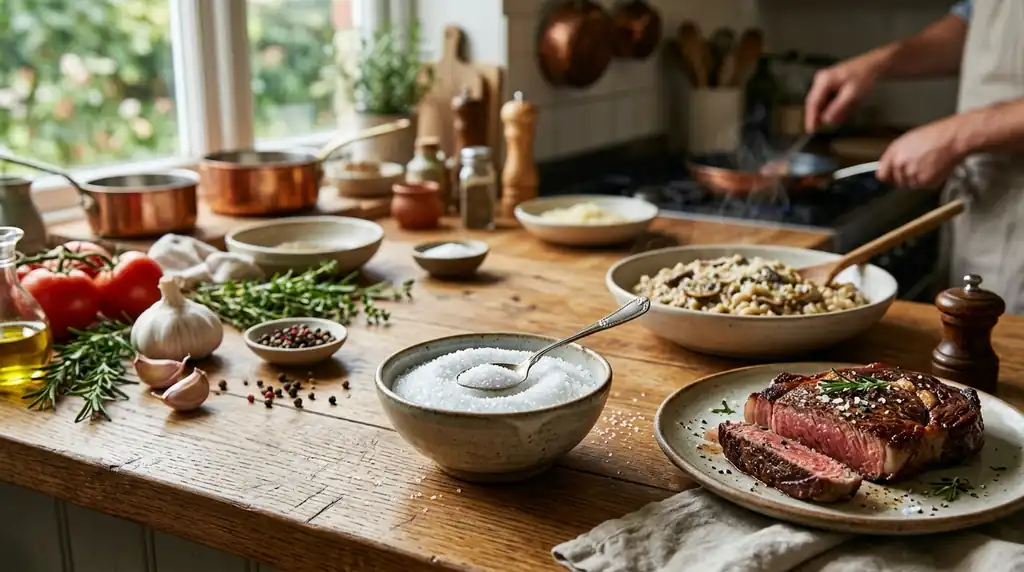
The Myth and the Stigma
For decades, Monosodium Glutamate (MSG) has been unfairly demonized in Western culture, blamed for everything from headaches to lethargy (a fabricated phenomenon previously known as "Chinese Restaurant Syndrome"). Extensive, decades-long studies by the FDA, the World Health Organization, and countless independent researchers have conclusively proven these claims to be entirely false.
MSG is simply a sodium molecule attached to glutamate (an amino acid). Glutamate is a naturally occurring compound found in massive quantities in foods we consider universally delicious: aged parmesan cheese, ripe tomatoes, mushrooms, cured meats, and human breast milk. Your body processes the glutamate in a tomato exactly the same way it processes the glutamate in a shaker of MSG.
What Does It Actually Do?
MSG does not taste like chicken, or beef, or anything specific. MSG is the pure, isolated essence of "Umami"—the fifth basic taste.
- When MSG hits your tongue, it triggers the savory receptors, making food taste deeper, richer, and more satisfying.
- It acts as a flavor amplifier. It makes a chicken soup taste more like chicken, and a tomato sauce taste more like tomatoes.
- It contains about one-third the amount of sodium as regular table salt, making it an excellent tool for reducing sodium intake while actually increasing flavor.
How to Use MSG in the Kitchen
MSG is sold in most grocery stores, often under the brand name "Accent" or in Asian markets as "Aji-no-moto" (which translates to "essence of taste"). It looks like slightly elongated salt crystals.
- The Golden Rule: MSG is not a replacement for salt. You must still salt your food normally. MSG is an enhancer, to be used in addition to salt.
- The Dosage: A little goes a very long way. For a family-sized pot of soup, chili, or stew, you only need about 1/2 teaspoon of MSG. For a pound of ground beef, a 1/4 teaspoon is plenty. Overusing MSG will not make the food toxic, but it will give the food a strange, overly intense, almost metallic savory taste.
- Where it Shines: Use MSG in savory, protein-heavy, or vegetable-heavy dishes. It works miracles in gravies, meatloaf, stir-fries, fried rice, and salad dressings. (A pinch of MSG in a homemade vinaigrette makes the salad wildly addictive).
- Where to Avoid it: Do not put MSG in sweet dishes, desserts, or pastries. Amplifying the savory notes in a chocolate cake is unpleasant.
By shedding the unscientific stigma and embracing MSG, you gain access to the most powerful flavor-enhancing tool used by professional chefs and food scientists worldwide.